
Automotive 'Made in Europe', component manufacturers appeal to the EU
Clepa's (European car industry) open letter to the Commission: 'Let's choose sovereignty instead of dependency. Let us choose European values'
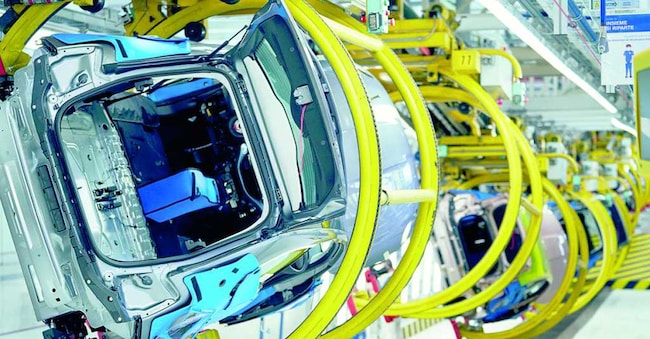
Only a few days after the Commission presented its Industrial Action Plan, the European car parts manufacturers, united in the Clepa association, put their demands on black and white on issues such as Made in Europe and Local Content, claim their industrial weight - car suppliers are responsible for 75 per cent of the total value of a vehicle - and denounce 'unfair competition' from players supported by distorting subsidies, price dumping, state-supported overcapacity and unilateral tariffs.
'Let us choose sovereignty instead of dependence. Let us choose European values,' writes Clepa, with the signature of president Matthias Zink and vice-presidents Iñigo Laskurain, Jean-Luc di Paola Galloni and Marco Stella (Anfia). The association strongly supports the trend emerging within the European Commission to 'anchor' incentives, support, public procurement and the CO2 credit system to a number of conditions, starting with the presence of a proportion of components made in Europe in the cars. "For the European automotive industry, the definition of a 'European vehicle' will be the decisive factor," writes Clepa, who assumes a figure of 75 per cent as opposed to the 70 per cent threshold the Commission is working on.
The Industrial Accelerator Act, Clepa also suggests, 'must set gradual and targeted thresholds for critical technologies, in particular electric and electronic (E&E) powertrains'. Here too, the text under consideration by the Commission envisages that a substantial proportion - up to 50 per cent - of battery components, cells and electric drive systems will be made on European soil.
According to the hypotheses that have emerged so far - the IAA draft is due to be presented on 26 February, although the date could be postponed due to the ongoing discussion between the various commissioners involved - there could therefore be a convergence towards the demands of the automotive components industry. More nuanced, however, is the position of the manufacturers, who fear an increase in costs. In the case of the open letter from Stellantis and Volkswagen, for example, the Made in Europe idea expressed focused on a number of critical components related to the electrification of vehicles.
Companies in the automotive supply chain are calling for the restoration of fairness and a level playing field and cite as clear signs the figures emerging from the trade balance sheets for 2025: 'Imports of automotive components from China have reached EUR 8.2 billion. We have witnessed an astonishing reversal: a trade surplus of almost EUR 7 billion just five years ago has turned into a deficit of EUR 0.7 billion,' they write.


