
Autonomous driving, Niulinx the Italian challenge to robotaxis. 38 million round
PoliMi technology, lead by a2a and cdp, with FS, Pirelli, Falck Family Office and Most. In Europe sharing within three years, in Italia rules to be changed

Key points
- A robosharing that reaches the passenger and drives away autonomously at the end of use without parking
- The challenge to Chinese and American capital and giants
- Type approval within three years, rules to be changed to circulate in Italia. Already possible in France and Germany
The European answer to Elon Mask's robotaxi and the advance of Chinese autonomous driving is called robosharing. An alliance that sees a2a and cdp in the front row and has already gathered the adhesions of Ferrovie dello Stato, Pirelli, Falck, VCPartners, as well as the automotive consortium Most. A 38 million euro round, 10 each from the two main investors, which gave birth to Niulinx, closed yesterday.
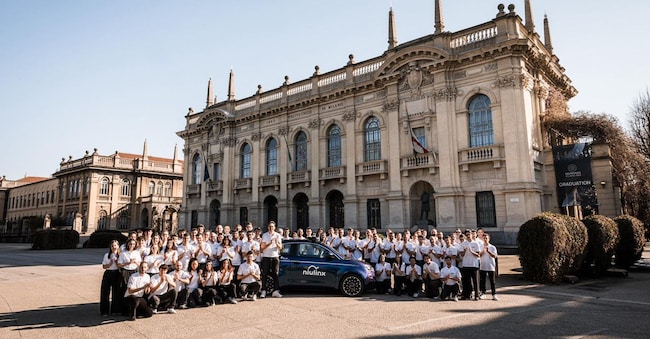
The start-up, led by CEO Luca Foresti, is made in Italy not only in terms of capital, but also in terms of technology. Behind it is the Milan Polytechnic and Sergio Savaresi's team, which has long been aiming at the ambitious project of bringing autonomous driving to the market, moving beyond the research phase to the industrial one. A goal that now finds support in the business world, to arrive within three years at European homologation of a fully autonomous L4 vehicle and start marketing if not the car then a service.
The modified and re-approved Niulinx cars will, in fact, be destined for sharing. The car will drive autonomously at low speeds, no more than 30 km/h, to reach whoever requested it wherever they are and, once on board, driving will be human. When you arrive at your destination, you will also not have to find a parking space: the car will drive itself away to reach the next customer. Not quite a robotaxi, but a hybrid service.
"I have great respect for American and Chinese technology, but I am convinced that we in Europe are now also ready to have our say," says Foresti. "We are all aware that the European ecosystem is different. It is so in terms of the capital involved, whether it is backed by public aid as in China or by giants such as Tesla, Google or Amazon in the US, which can count on investments in the order of billions. It is because of bureaucratic systems: in Europe, not only is type approval more complex, but putting on the road has different rules in each country'. These issues do not dampen the euphoria of the debut: 'We expect to have type approval valid throughout Europe within three years. And, with legislation in force, we could already be circulating in France, Germany and Croatia today'.
In the meantime, dialogue has begun 'both with other possible investors, who have not contributed at this early stage,' he continues, 'and with the ministry with which we have interfaced. A challenge that is not only technological but also regulatory and financial: 'Nobody thinks that with a snap of their fingers everything will happen, but 38 million is a lot in Italia today for what is in fact a university spin-off. Our challenge is to gain enough confidence to raise other capital, and we are confident that other European countries will come up with regulations for fully autonomous driving within a limited timeframe'.

