
Road haulage: tonnes of fruit and vegetables going to waste and a boom in imports
The inability to collect agricultural produce and deliver it to supermarkets has prompted wholesale markets to step up imports from Spain, Albania, Turkey and Greece

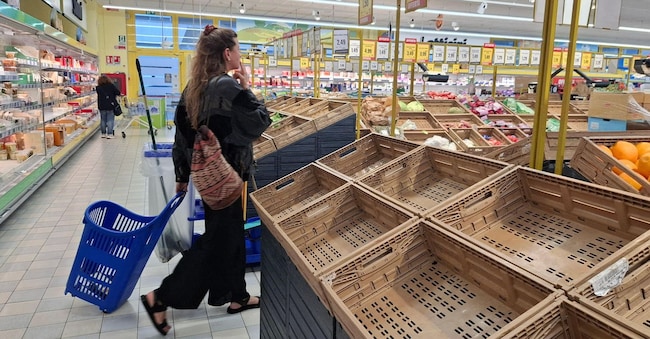
The damage and the insult. Whilst in recent days, due to the road haulage strike in the regions of southern Italia, tonnes of fresh Italian agri-food and fish products have either gone to waste in the fields without being harvested or in the ports after being unloaded from fishing vessels, they have literally been sent to the scrap heap due to the impossibility of preserving them; meanwhile, in an attempt to plug the gaps in supply, the wholesale market network has turned primarily to foreign sources.
The blockade has benefited Spain, Greece, Albania and Turkey
The road haulage strike in Italia has therefore benefited agricultural and fisheries production in Spain, Greece, Albania and Turkey. This was reported by Italmercati, the network of wholesale agri-food markets which, in Italia, comprises 22 member markets across the country, 4,000 businesses, 7 million tonnes of produce handled annually, generating a turnover of 11 billion euros and employing 26,000 people.
Italmercati: an increase in overseas purchases is inevitable
“As the Italmercati Network,” commented Fabio Massimo Pallottini, president of Italmercati, “we are constantly monitoring the impact of the protests and blockades on our national logistics hubs. At present, we are continuing to see a marked decline in fruit and vegetable arrivals from southern Italia, particularly from Sicily and Calabria, but the system is holding up. Markets are managing to ensure supplies by balancing them with local produce and an inevitable increase in imports from abroad, primarily from Spain, but also from Greece, Turkey and Albania. Prices are high but, for some products, they are still under control. However, we hope for a swift resolution so as not to place a further burden on the entire agri-food supply chain and, above all, on households.”
Supply difficulties in Rome too
Over the past week, supply difficulties have also been reported in supermarkets across the capital. “The lorry drivers’ protests against high fuel prices and the resulting roadblocks in southern Italia,” commented the Rome Agri-Food Centre (CAR), “are putting the entire fruit and vegetable supply chain under severe pressure. The latest report from our Observatory has highlighted a growing crisis in fruit and vegetable supplies destined for the capital, due touncertainty over journey times and high operating costs, which are triggering a knock-on effect that is preventing farms from shipping perishable goods and threatening the regular supply of fresh produce to markets. The crisis, which was initially concentrated in Campania, Sicily, Calabria and Puglia, is currently spreading and has now also affected the southern part of Lazio.”
Tomatoes worth their weight in gold: wholesale prices between 5 and 7.5 euros per kg
On the Roman market, the lack of supplies of key produce from the South – such as peppers, aubergines, table grapes and tomatoes – is becoming increasingly apparent. The Observatory reports significant pressure on wholesale prices due to product shortages: Sicilian ‘Ciliegini’ and ‘Piccadilly’ tomatoes are being sold (wholesale, not retail) at prices exceeding 5 euros per kg, whilst red ‘Datterini’ tomatoes are reaching 7.50 euros per kg.


