
Autumn colours and flavours in Mallorca, little by little
Don’t miss the Festa des Vermar, the Dijous Bo and the Fira de s’Oliva, which celebrate the grape harvest, craft trades and olive oil

Key points
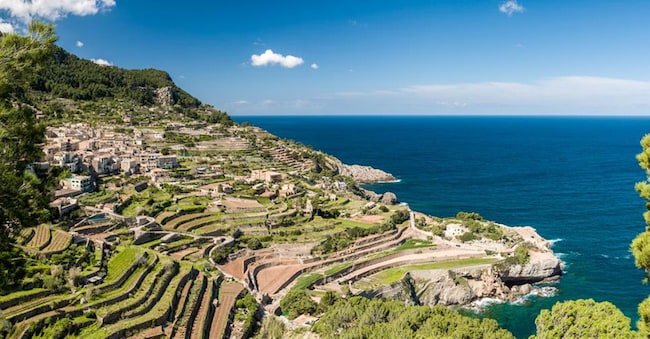
Once the peak beach holiday season is over, Mallorca shifts gear and invites you to explore it ‘poc a poc’ – a dialect expression meaning ‘one step at a time’. It is at this time of year that the largest island in the Balearics can be explored at a leisurely pace, the villages return to their everyday rhythm, and the locals reclaim their space. What’s more, autumn brings with it some of the most important events on the island’s calendar, such as the Festa des Vermar, the Dijous Bo and the Fira de s’Oliva, dedicated respectively to the grape harvest, crafts and olive oil. These festivals and fairs weave together history, culture and folklore to celebrate what has shaped the identity of the three inland villages, all united by a strong connection to tradition.
Grape pressing and battles
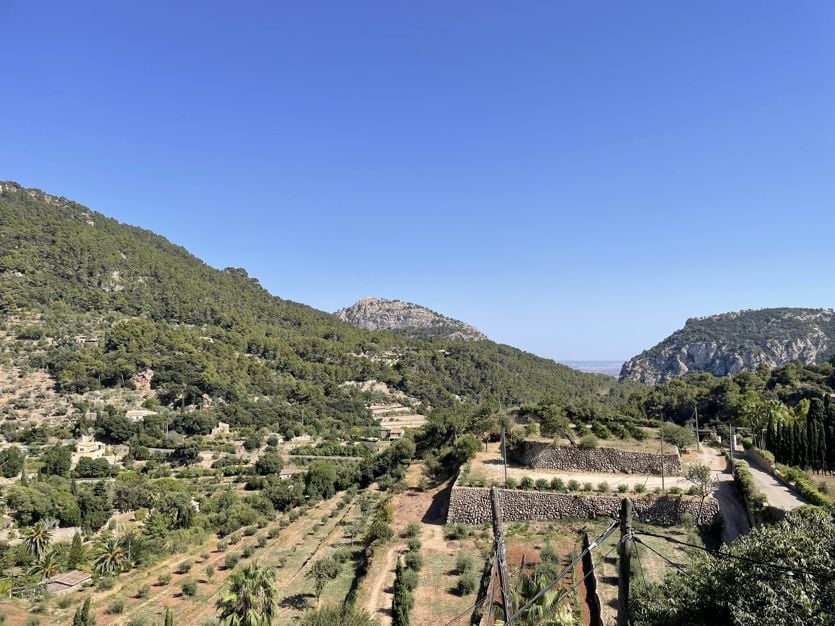
At the foot of the imposing Serra de Tramuntana mountains, the Mediterranean light – which held a special fascination for Joan Miró – bathes the vineyards, which take on golden hues in autumn. In this area of the island’s north-western interior, the characteristics of the soil and climate have made it possible to cultivate indigenous grape varieties such as Manto Negro, Callet and Moll Gargollassa, Giró Ros, and led to the towns of Binissalem, Santa Maria del Camí, Consell, Santa Eugènia and Sencelles being granted Designation of Origin status in 1990. It was to preserve the memory of the work carried out amongst the rows of vines that, sixty years ago, the desire arose to celebrate the end of the grape harvest. A tradition that has been shared and passed down through the generations with the Festa des Vermar in Binissalem. For three weeks, the whole town is involved in a programme featuring activities, music, gastronomy, tastings, exhibitions, book launches, themed parades and competitions centred on wine culture, whilst the locals wear traditional 18th-century Mallorcan costumes. Now in its 60th year, the Festa des Vermar will continue until 27 September with a succession of entertaining and popular events; among the most eagerly awaited is the evening of Thursday 24, when visitors can sample the traditional Fideus de Vermar, a culinary speciality originating in Binissalem, a stew made with lamb and pasta. The event takes place at 9 pm at the Can Arabí restaurant in Binissalem, but everyone must bring their own plate and cutlery, thus taking part in a truly unique social occasion. On Saturday 26th at 5 pm, it’s time for the traditional parade of allegorical floats, and finally, the whole day on Sunday 27 September is dedicated to the grand finale of the Festa des Vermar, featuring a special parade to mark the 60th anniversary of the festival. The grape harvest festival is the perfect opportunity to discover the charming village of Binissalem, whose centre is home to numerous ‘casalse’, that is, ancient stately homes dating back to the 1700s and 1800s, during the town’s most prosperous economic period. These historic buildings feature façades and interiors embellished with ‘pedra de Binissalem’, a distinctive type of natural stone quarried in this area.
From coast to coast through the most charming villages
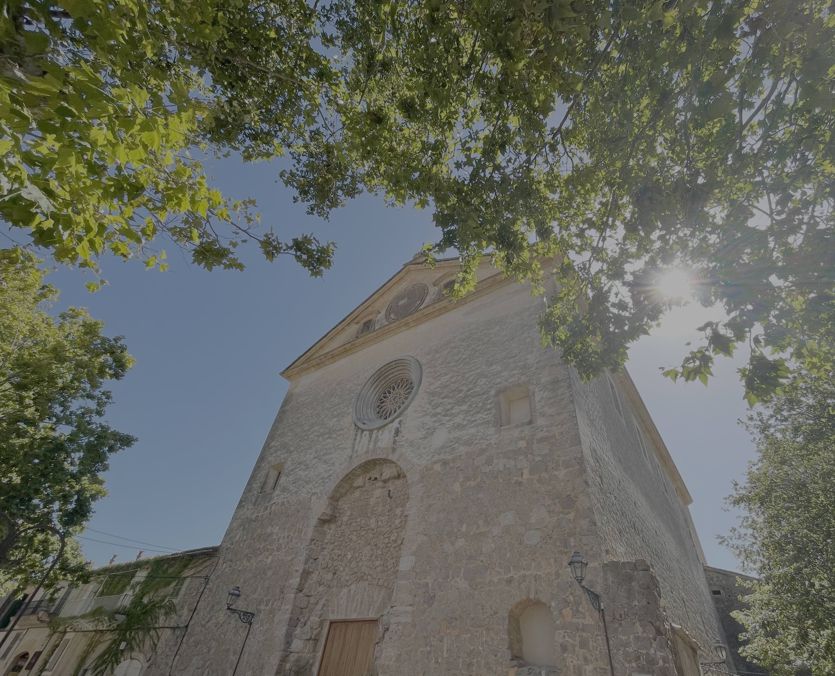
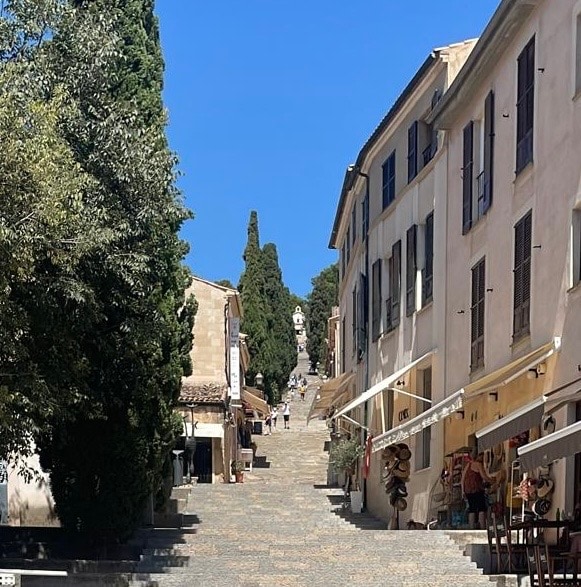
The roads that criss-cross Mallorca from north to south and from west to east, identified by the abbreviation ‘Ma’ followed by a number, invite you to take detours along the way to visit some of the most charming villages. Historic towns and villages nestled amongst the hills of the interior or perched on the cliffs overlooking the Mediterranean Sea. Set against the mountainous backdrop of the Serra de Tramuntana, nestled amongst dense vegetation that alternates between pine forests, vineyards, orchards and olive groves, villages such as Valldemossa and Deià catch the eye, captivating even the least romantic of souls. Perched high on the hill on which it stands, Valldemossa is distinguished by the Real Cartuja, an ancient monastery and royal residence that even hosted the composer Frédéric Chopin; today, the building is open to the public and can be visited. The link with religious traditions is also deeply rooted in Mallorcan town life. Most villages are home to monasteries or sanctuaries; at the highest point of the town of Felanitx, in the south-east of the island, at an altitude of five hundred metres, stands the Sanctuary of Our Lady of San Salvador, a monastery dating back to the mid-14th century, a place dedicated to prayer offering a spectacular panoramic view. To the north of Mallorca, the historic town of Pollença, with its charming old town, preserves the Calvari staircase, 365 steps that evoke the Passion of Christ in the Christian tradition; whilst some twenty kilometres from the town stands the Santuari de Lluc, Mallorca’s most important place of pilgrimage, surrounded by a sacred woodland.
Autumn events
Inca, one of Mallorca’s most important towns, has a fascinating history to tell, linked to the artisanal production of footwear and leather goods, which began in the 13th century and later evolved into an industrial model with the export of Mallorcan footwear all over the world. Even today, Inca is famous for its footwear industry, and visitors can explore the headquarters of the sector’s leading and most prestigious brands, which have shops open to the public. The town’s commercial heart comes to life weekly with the market held every Thursday morning in the streets of the town centre, but the most eagerly awaited event is the grand autumn fair, which takes place every year on the third Thursday in November and attracts visitors from all over the island. The Dijous Bo, scheduled for 19 November, is an event that transforms the whole of Inca into a vast open-air market dedicated to crafts and agriculture, featuring local produce, leather goods and traditional Mallorcan cuisine. Among the local delicacies is ‘Pa amb oli’, bread seasoned with olive oil which, in its simplicity, is a tasty and popular snack. The Fira de s’Oliva, taking place on Saturday 21 and Sunday 22 November 2026 in the village of Caimari, pays tribute to one of Mallorca’s finest products. This fair celebrates extra virgin olive oil, the olive harvest, traditional cuisine, crafts and the agricultural heritage of the Caimari community. Situated at the foot of the Serra de Tramuntana mountains, in the municipality of Selva, this village is surrounded by countryside characterised by terraces, dry stone walls and ancient olive groves which, for generations, have shaped the local economy and landscape through olive cultivation. During the Fira de s’Oliva weekend, the streets of Caimari are transformed into an open-air festival, where visitors can taste freshly pressed olive oil, shop at the stalls and watch traditional demonstrations.

