
Awards, acquisitions and reputation: the patronage that builds a collection
The Wilhelmsen family has confirmed its support for the Henie Onstad Kunstsenter prize for a further 16 years. A model that brings together private funding, museum endorsement and global visibility for contemporary artists

Key points
In an art world where support for contemporary art is increasingly linked to the ability to combine private funding, institutional recognition and the building of collections, the Lise Wilhelmsen Art Award Programme presents an interesting case. Sponsored by the Wilhelmsen family in collaboration with the Henie Onstad Kunstsenter in Norway, it is much more than a $100,000 prize. The biennial programme combines the prize with a solo exhibition and the acquisition of works for the museum’s permanent collection, which comprises over 8,000 works.
The agreement between the Wilhelmsen family and the museum has been confirmed for a further eight editions over a period of 16 years, ensuring the continuity of a project that combines private patronage with the promotion of contemporary art, whilst also strengthening the museum’s position within the international contemporary art scene. The value of the prize lies, above all, in its ability to bring together financial resources, curatorial legitimacy, museum visibility and acquisitions within a single framework; the combination of these factors can strengthen an artist’s position within the international art world.
Since 2019, the prize has been awarded to four international female artists: Otobong Nkanga (1974), Guadalupe Maravilla (1976), Alia Farid (1985) and, in 2025, Lap-See Lam. These artists’ work addresses key themes in the global debate, ranging from natural resources to migration, and from cultural identities to memory.
Lap-See Lam: institutional legitimacy and the market
For Lap-See Lam, born in 1990 in Sweden to Chinese parents, this accolade forms part of a journey towards growing international visibility. Represented by the Berlin-based Galerie Nordenhake GmbH (with prices ranging from 15,000 to 60,000 euros for her sculptures, whilst her immersive videos are priced at around 45,000 euros), she employs video, sculpture, installation and virtual reality in her practice to explore the transmission of cultural heritage and the transformations of identity within the Cantonese diaspora in Europe. Family stories, including that of the Chinese restaurant opened in Stockholm by her grandmother after arriving from Hong Kong in the 1970s, become the subject matter for works in which narrative traditions, myths and digital technologies converge.
Lam’s career offers a vantage point on the relationship between curatorial recognition and the art market. In 2023, the artist presented ‘Tales of the Altersea’ at the Swiss Institute in New York and at Portikus in Frankfurt; in 2024, she represented the Nordic countries at the 60th Venice Biennale with ‘The Altersea Opera’, a project realised in collaboration with the composer Tze Yeung Ho and the textile artist Kholod Hawash. In 2025, she exhibited at the Moderna Museet in Stockholm and in 2026 she was the subject of a solo exhibition at the Secession in Vienna.
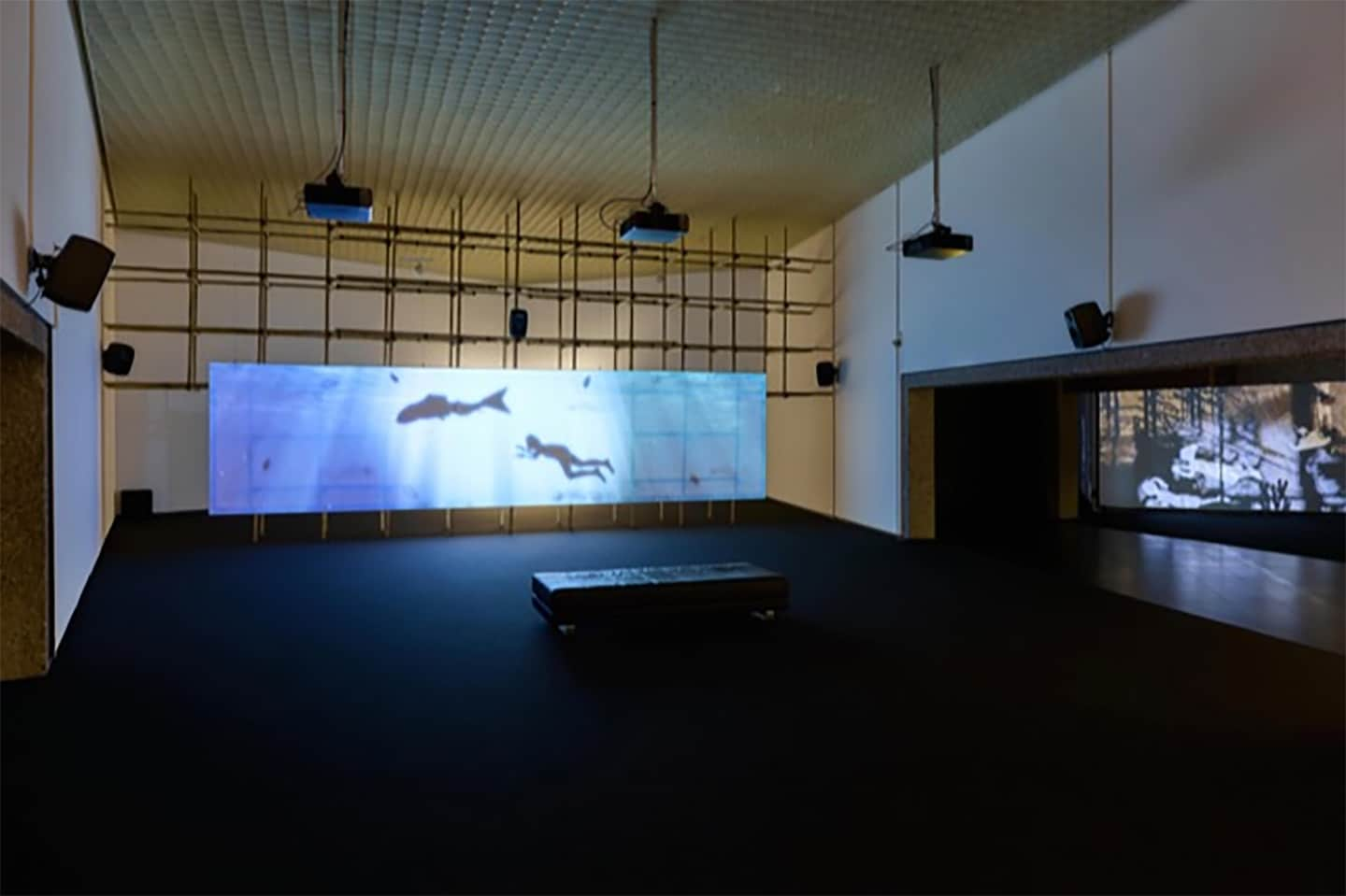
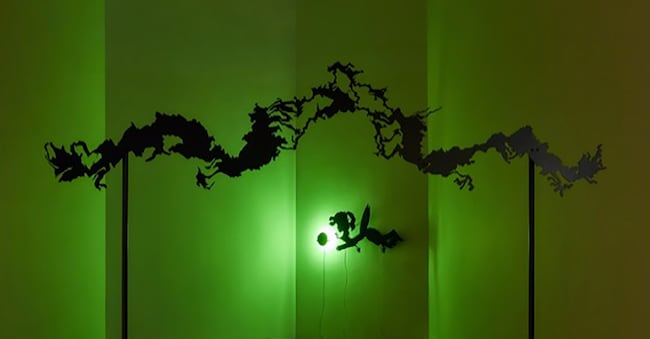
From 11 June 2026 to 24 January 2027, the Henie Onstad Kunstsenter presents its largest exhibition to date, ‘Ombres’, featuring new works and two large-scale shadow theatre installations brought together for the first time in a single space. The exhibition, accompanied by a catalogue and an acquisition for the permanent collection, completes the programme provided for by the prize. This series of events documents a growing international institutional presence, an important factor in building an artist’s reputation. It does not, however, necessarily lead to an automatic rise in market value.
The museum’s accounts: 66.6 million crowns in revenue
The Prize forms part of the history of an institution founded in 1961, when the figure skater Sonja Henie and the collector Niels Onstad founded the centre with 110 works of art and 10 million Norwegian kroner earmarked for the centre’s construction, plus a further 10 million for an operating fund. Opened to the public in 1968, the Henie Onstad Kunstsenter has built up a collection that now exceeds 8,000 works. The 2025 accounts of the Sonja Henies og Niels Onstads Stiftelse, the foundation that manages the centre, provide a snapshot of the organisation’s financial scale. According to financial statements published in the Norwegian company register, revenue stood at 66.58 million kroner, approximately 4.4 per cent higher than in 2024. The net profit returned to positive territory at 1.30 million kroner, following a loss of approximately 1.54 million in the previous financial year. Total assets amounted to 98.4 million kroner, with equity of approximately 53 million and 56 employees. The foundation also received additional public funding of 2.5 million Norwegian kroner from Bærum Municipality in 2026, confirming the role of public funds in ensuring the institution’s continued operation.

