Inflation

Back to school with price increases: 658 euro for school supplies and 537 euro for books for each student

Online you save 21.6 per cent compared to stationery stores, but costs increase for backpacks and books

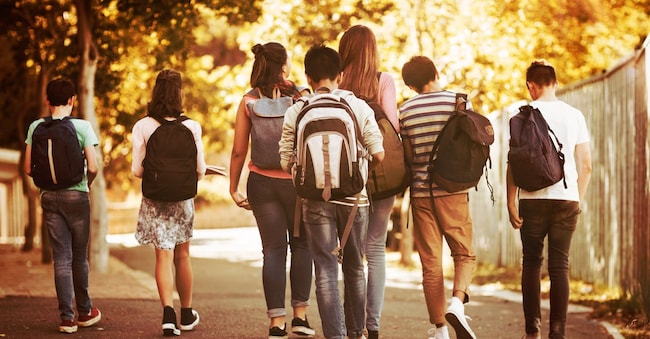
(Adobe Stock)

3' min read

3' min read

Ready to go back to school, but also facing price increases of around 1.7%. Because, spending is growing, especially for the purchase of students' equipment. According to the findings of the Federconsumatori National Observatory, compared to 2024, the cost of school supplies has risen by an average of +1.7%.

658.20 euro is the average expenditure for school supplies

.

"The most expensive items are confirmed to be those related to the backpack, especially if you choose the trolley version, to avoid carrying excessive weights on your shoulders, or the hi-tech version, with an integrated power bank to recharge your devices.

Loading...

Market and online prices

.

The analysis carried out by the experts of the observatory took into account both the products of the large-scale retail trade as well as the cost of products on sale in stationery stores and online, "since this mode of purchase is now increasingly widespread and often saves time and resources".

On average, in fact, buying such products online 'saves 21.6 per cent compared to buying from stationery stores and 3 per cent compared to buying from the large-scale retail trade'.

Prices

.

Just a few examples: for a branded backpack trolley you can spend up to 137 euros. For a full, branded pencil case, the price ranges from 27 to 37 euros. A notebook costs up to 2 euro, while a set of pencils starts from 7.99 euro up to 9.98 euro.

Better reuse

.

Among the costly items are those related to the expenditure of non-educational products. This is why, according to the observatory's experts, "many will resort to reusing material from previous years (backpacks and pencil cases), to exchanging/gifting products also through online groups and social networks, as well as to used school books".

Books, spending drops

One of the items showing a decrease in prices, better than expenditure, concerns books. "On average, each student will spend €537.10 for compulsory texts + 2 dictionaries. The variation with respect to 2024 is in favour of families, -9.2% - underlines the Federconsumatori report -.It should be noted that, while in 2024 there was a significant increase in the costs of textbooks for secondary schools, this year these are more contained and sometimes decreasing, while there is a sharp increase in the costs of texts for first grade high schools".

The calculation is made by taking into account school textbooks from different classes of primary and secondary schools. "The costs indicated are for new books. Buying used books, on the other hand, saves more than 29 per cent'.

Up to 1,400 euro expenditure

.

Expenses are particularly high for pupils in the first classes. "A first-grade student in upper secondary schools will spend an average of €555.16 on textbooks + 2 dictionaries, an increase of 20.2% compared to last year," the report emphasises. "To these expenses must be added €658.20 for school supplies and spare parts throughout the year, for a total of €1,213.36. And that's not all: "A first-grader in upper secondary school will spend 808.90 euro for textbooks + 4 dictionaries (+13% compared to last year) and 658.20 euro for school kits and spare parts, for a total of 1,467.10 euro".

Other costs

.

Then there are the other costs, which concern the purchase of a PC, the programmes and devices required for the educational use of such a tool, which has become indispensable.

"The study shows that between computers, webcams, microphones, antivirus software, and basic programmes, a family, having to equip itself with such devices - underlines the observatory -, comes to spend an average of 420 euros, to which one must add the costs for the Internet connection if it should be activated specifically. However, buying remanufactured technology products is not only good for the environment, but also saves more than 38%".

Support measures

.

To support families, there are various measures put in place by municipalities and regions that provide vouchers, discounts or free school textbooks for low-income families.

"Measures that are certainly positive, but often insufficient to cover such high costs". Hence Federconsumatori's request that there be 'more support for families, with bonuses intended not only for those who find themselves in conditions of great economic difficulty, but also aimed, in a progressive measure, at workers who have seen their purchasing power dramatically reduced'.

Copyright reserved ©
Loading...

Brand connect

Loading...

Newsletter

Notizie e approfondimenti sugli avvenimenti politici, economici e finanziari.

Iscriviti