
Bad weather, Coldiretti estimates 30 million in crop damage in Sardinia
The regional association calls for a state of calamity in order to proceed immediately with aid to companies

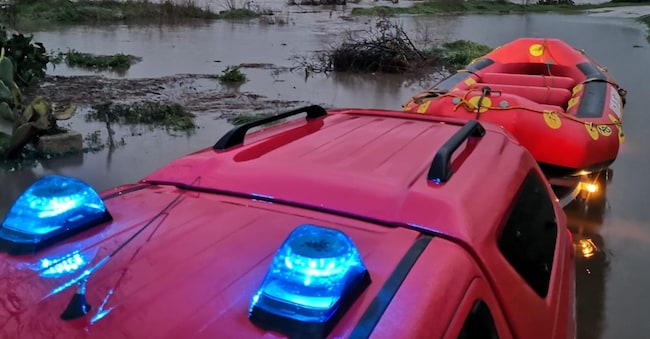
After the rains, which "saw the wettest January in the last 61 years", the damage count has begun in Sardinia. Which, according to Coldiretti, are worth, at least for the moment, 30 million euro with crops devastated by the fury of the bad weather and a long sequence of extreme weather events that have marked the entire winter. A situation that has prompted Coldiretti Sardegna to 'strongly ask the Region for the immediate activation of the state of natural calamity, in order to proceed very quickly with aid to the devastated farms and a rapid emergency nucleus to quantify the losses and proceed immediately with aid'.
Reduced productions
"To date, the production of artichokes, the island's flagship crop this season, has been reduced by at least a third," the organisation writes in a document, "with over 1,000 hectares lost due to flooding alone. The list of damages speaks of devastated citrus groves, rotten vegetables in the fields before harvesting, farm structures damaged or destroyed by the winds, cereals and durum wheat that risk a season worse than the last ten years, stopped sowing and fodder in serious difficulty.
'We are facing a dramatic and unprecedented situation,' says the president of Coldiretti Sardegna, Battista Cualbu. 'The first count already speaks of over 30 million euro in direct damage, but it is still a partial estimate. Companies are on their knees and cannot wait any longer. We are calling for the immediate declaration of a state of natural calamity over the entire regional territory, the start of checks in the field, and rapid compensation to allow companies to continue operating.
The organisation's leaders also emphasise the need to activate all the derogations provided for by national and European regulations, starting with the recognition of force majeure on Pac commitments, crop rotations and sowing impossible due to the persistent rains, as well as the extension of authorisations for new vineyard plantings in cases of force majeure.
Infrastructure Investments
"Only a few months ago we were fighting one of the most severe droughts in recent years, today we find ourselves with submerged fields and water that ends up in the sea,' says Luca Saba, Director General. This shows that climate change can no longer be tackled with emergency measures. Without structural investments in water infrastructures, leakage recovery, reservoirs and interconnections, we will continue to pay a very high price, first for the lack of water and then for its excess'.

