
Bangladesh - Libya - Italy: people trafficking amid torture and extortion
More restrictive precautionary measures confirmed for transnational crimes, from enslavement to sexual violence, committed in a Libyan migrant centre
by Patrizia Maciocchi
 Aggiungi Il Sole 24 Ore
ai preferiti su Google
3' min read
3' min read
Conspiracy, reduction to slavery, kidnapping for the purpose of extortion and group sexual violence. All with the aggravating circumstance of transnationality, provided for in Article 61-bis of the Criminal Code. On the basis of these accusations, supported by serious evidence, the Court of Cassation (sentence 29841/2025) confirmed the precautionary measures in prison against a citizen of Bangladesh, arrested by the Ragusa mobile squad last December, by proxy of the Anti-Mafia District Directorate of Catania, as a suspected torturer in a Libyan collection centre. Nailing him to his responsibilities was one of the victims of violence who had recognised him in the Pozzallo centre.
The affair
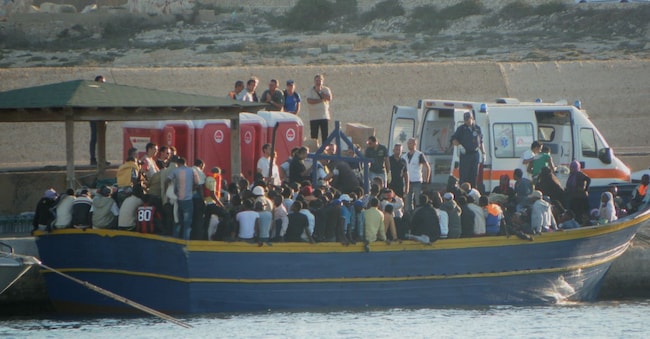
.The judges were able to reconstruct the system that led citizens, in this specific case from Bangladesh, to arrive in Italy after a 'passage' in Libya, thanks to a criminal network. The victim had paid, with approximately EUR 3,000, a person in Bangladesh to organise a trip to Libya with the aim of getting him a job in Italy. The landing had been in Zuara, a collection centre where 600 people were detained. There, the woman, of the same nationality as the suspect, had stayed for three months, during which she had been raped by several people, beaten and tortured..
Finally, she had been 'sold' together with other compatriots to the head of an organisation of men traffickers, of whom the applicant was a loyal collaborator, with the task of torturing 'prisoners'.
For the judges, a credible account of what took place in the centre in Libya, supported by transfers that arrived after the torturers had sent the families 'pitiful videos and audios' to induce them to pay a ransom for the safety of their loved ones.
The Transnational Link
.A story - the Court of Cassation points out - from which emerges the 'transnational link between Bangladesh, the land of recruitment, where human traffickers contacted the future victims, charging them with the promise of work in Italy, and Libya, where they were illegally detained amidst violence and torture - the sentence reads - with the mirage of a better future and from where, at the price of ransoms demanded from their families, they were transported to Italy'.

