
Bangladesh, death sentence for former premier Sheikh Hasina
The Awami League leader, who fled to India after the fall of her government, was found guilty of crimes against humanity

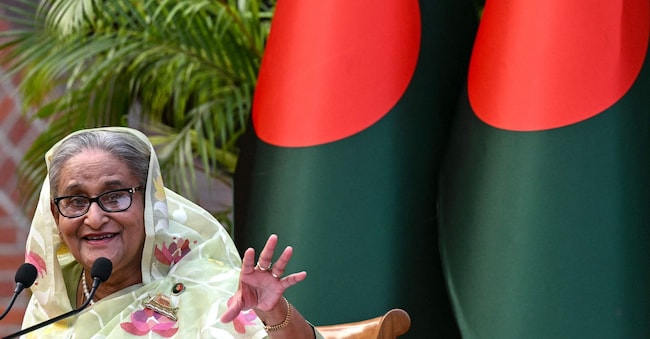
from our correspondent
NEW DELHI - A special court has sentenced former Bangladeshi premier Sheikh Hasina to death for crimes against humanity for her role in the massacres of protesters that took place in the summer of 2024, shortly before her hasty escape to India. The announcement of the sentence was greeted by shouts of jubilation both inside the courtroom and outside.
A few minutes after the verdict was read, Hasina attacked the judges, saying the verdict was delivered 'by a manipulated court, installed and led by an illegitimate government without an electoral mandate'. Speaking about the violence that landed her on the stand, Hasina admitted that during the days of the protests her government 'lost control of the situation', but that what happened in the streets 'cannot be considered as a premeditated attack against the citizens'. Hasina claims that accusing her of ordering the firing on protesters is 'categorically incorrect' and called the verdict against her 'political'.
In a report published in February, the United Nations estimated the number of victims of violence by security forces who unsuccessfully attempted to suppress a student uprising against the leader and her executive between July and August last year at 1,400. An advisor to the current interim government estimated the number of casualties at around 800 and the number of injured in the clashes at 1,400. Citing one of the indictments, Judge Golam Mortuza Mozumder said that in the days of the 2024 student demonstrations Sheikh Hasina ordered the security forces to 'employ drones to locate places where protesters were gathering, and then have them killed by the military in helicopters'.
Hasina's conviction could provoke new violence in Dhaka, where the law and order situation is very tense due to protests by militants of the Awami League, Hasina's banned party that seems destined to be unable to take part in the general elections scheduled for the first half of next February. The Awami League militants have proclaimed a bandh, or general strike, a form of demonstration that is widespread throughout South Asia and often triggers violence between those who try to evade it and those who call it.


