
Bangladesh: Supreme Court strikes down law that sparked protests with over 100 deaths
According to the Court's ruling, 93% of the public posts are to be awarded on the basis of merit, while only 5% will go to family members of veterans of the 1971 war of independence against Pakistan and 2% to members of ethnic minorities or disabled persons

2' min read
2' min read
From our correspondent
NEW DELHI - After the Supreme Court on Sunday ruled in favour of the students who had been protesting for days against the reintroduction of a quota system in public recruitment, Bangladesh is experiencing hours of relative calm, but loaded with tension. Protesters have issued a 48-hour ultimatum to the government to reopen the universities, reactivate telephone and internet services, and release the students arrested in recent days.
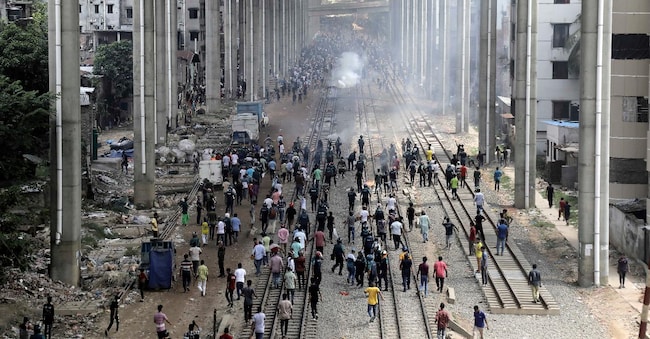
If the demands are not met, the protesters threaten to return to the streets where in a week of violent clashes with the security forces (flanked by activists of the Awami League, the party of Prime Minister Sheikh Hasina) at least 149 people have lost their lives and thousands have been injured.
A still tense situation, which in the last few hours has prompted Nobel Peace Prize winner Muhammad Yunus to appeal to foreign governments and the United Nations to "do everything in their power to stop the killing of those exercising their right to demonstrate". The father of the microcredit - who in recent years has been repeatedly criticised by the premier and targeted by his country's judicial system - also called for an investigation into the killings of recent days.
According to Sunday's ruling, 93% of public posts are to be awarded on the basis of merit, while only 5% will go to family members of veterans of the 1971 war of independence and 2% to members of ethnic minorities or disabled people. The court's decision comes after a court last month reintroduced the quota for family members of those who had fought against Pakistan. The controversial positive discrimination system had been abolished a first time in 2018 following student protests.


