
Bangladesh: textile workers are calling for an increase in the minimum wage, which currently stands at 90 euros a month
The country in north-eastern India is currently the world’s second-largest exporter of clothing, behind China
from our correspondent Marco Masciaga
 Aggiungi Il Sole 24 Ore
ai preferiti su Google
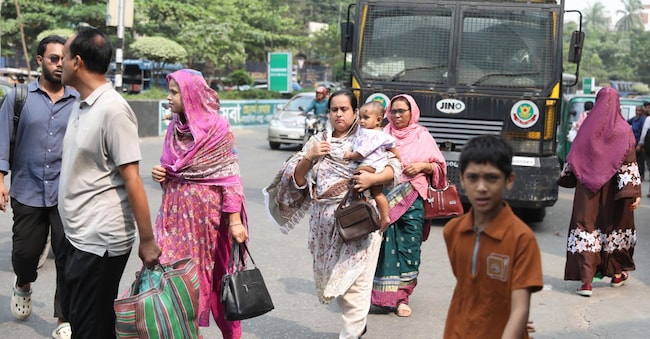
NEW DELHI – Textile workers took to the streets again on Monday in several industrial districts of Bangladesh to demand pay rises that would enable them to cope with the soaring cost of living caused by the conflict in the Middle East. The fact that the unrest – following Sunday’s strikes and incidents, and despite the announcement of the formation of a government committee to address the issue – has continued highlights just how complex the challenges posed by the economic situation are for this Asian country.
The main demand among those put forward in recent days concerns the minimum wage. The current minimum wage is 12,500 taka per month, equivalent to 90 euros. The protesters – in what is clearly a negotiating tactic aimed at finding a compromise as far removed as possible from the current figure – are demanding that it be more than doubled to 30,000 taka. The increases are intended to offset, at least in part, an average inflation rate which has reached 8.65 per cent over the last 12 months.
It will be up to the commission recently set up by the government to create the conditions for a compromise that accommodates some of the workers’ demands, but without unduly undermining the industrial appeal of a country which, largely thanks to its very low labour costs, is currently second only to China in the ranking of the world’s leading clothing exporters.
The United Nations’ decision
But to really get to the heart of why, in a few months’ time, clothes bought from various fast-fashion chains will cost a little more, we need to take not just one, but several steps back. The timing of the start of the current phase of the dispute is by no means coincidental, as it was on Thursday that the United Nations decided to grant Bangladesh the status of Least Developed Nation for a further three years. This will allow the Asian country to continue to benefit from a range of trade and financial concessions.
The decision comes as a breath of fresh air for the clothing industry, which will be able to continue to enjoy duty-free access to key markets such as the European Union. Business associations had warned that the loss of these concessions could cost billions of dollars in exports. Not least because of the risk that it might coincide with a prolonged period of international instability.


