
Bankitalia is not following the Dutch central bank’s lead: no transfer of gold reserves
Between March and August 2026, De Nederlandsche Bank transferred 86 tonnes of gold from the United States and Canada to the Bank of England

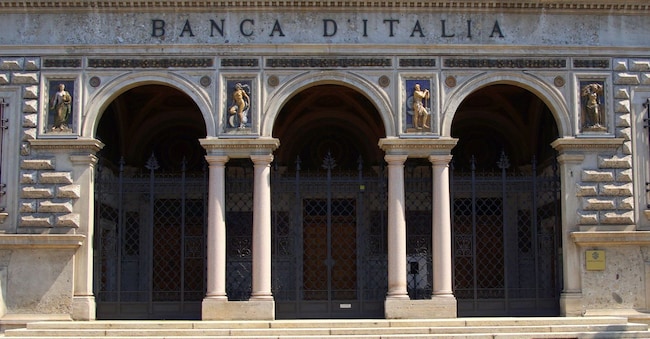
The Bank of Italia has not carried out any transfer of gold reserves. The announcement was made by the Bank itself, in response to those who were wondering whether it would take the same decision as the Dutch Central Bank (DNB), which in recent days announced that it had moved part of its gold reserves from the United States and Canada to London in response to growing geopolitical tensions.
Italian reserves
As stated on the Bank of Italy’s website, with total gold reserves of 2,452 tonnes, with a current market value of approximately 280 billion euros, Italia ranks fourth in the world in terms of gold reserves. The top three in the ranking are the US Federal Reserve, the German Bundesbank and the International Monetary Fund. Italia’s gold holdings consist mainly of ingots (95,493) and, to a lesser extent, coins
Our country’s reserves are held not only in the vaults of Palazzo Koch in Rome, but also at a number of other banks. Whilst 1,100 tonnes remain in Italia (44.86 per cent of the total), an almost equivalent portion of our reserves is held in the United States (1,061.5 tonnes, 43.29 per cent of the total). Gold is also held, to a lesser extent, in Switzerland (149.3 tonnes, 6.09 per cent) and in the United Kingdom, where 141.2 tonnes (5.76 per cent) are held.
The DNB’s decision
Last Wednesday, De Nederlandsche Bank announced that it had withdrawn 86 of the 313 tonnes of gold held in the US and Canada. In a statement, the DNB explained that the measure is intended to improve the liquidity and marketability of the reserves and strengthen the bank’s resilience to crises. In order to respond more effectively to emergencies arising from an increasingly unstable international situation, the Netherlands has sought to achieve a more balanced distribution of its reserves to spread the risk.
The transfer took place between March and August, and the gold was moved to the Bank of England in London. The British capital is regarded as the world’s ‘leading centre’ for physical gold, where the metal can be made available more easily and quickly in the event of a crisis. Governor Olaf Sleijpen clarified that the Netherlands expects “never to have to use it” but that, at the same time, it needs to strengthen the country’s resilience.

