Report

Bank of Italy: Lazio is growing faster than Italia as a whole, but exports are slowing and the Jubilee’s impact on tourism is waning

In the first half of 2026, Lazio outperformed the national average thanks to public works and consumer spending, whilst exports and tourist numbers showed signs of a decline.

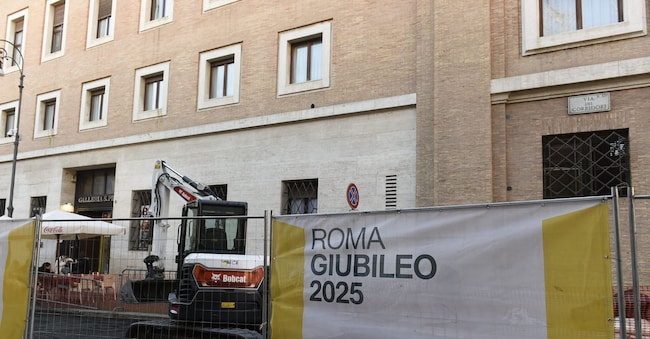
LAVORI IN CORSO IN  VIA DEI CORRIDORI PER RIQUALIFICAZIONE PER IL  GIUBILEO 2025,  ROMA  CANTIERE IMAGOECONOMICA

4' min read

Translated by AI
Versione italiana

4' min read

Translated by AI
Versione italiana

In the first half of 2026, economic activity in Lazio continued to expand, despite persistent international tensions and rising energy prices. The Bank of Italy’s quarterly regional economic indicator (ITER) shows a 1 per cent increase in output compared with the same period last year, a figure slightly above the national average. Activity levels in the region were underpinned by spending on public works and consumer spending; external demand contracted. These figures emerge from the Bank of Italia’s regular November report on the economy of Lazio.

Industrial activity proved to be positive, despite the fall in exports

In industry in the strict sense, the assessments of turnover trends recorded in the Bank of Italia’s survey were predominantly positive, particularly for larger firms. However, exports fell (-6.8 per cent in value; +4.5 per cent in Italia), reflecting the decline in foreign demand in the aerospace and pharmaceutical sectors (-6.5 per cent); the latter having recorded strong growth the previous year, driven by expectations of tighter US tariffs.

Loading...

Growth also in the construction sector, driven by public works

In the construction sector, the rise in output was driven by the continuation of public works, particularly those linked to the PNRR and the remaining Jubilee-related projects. Hours worked rose by 1.0 per cent, in contrast to a decline at national level. In the first half of the year, local authorities’ expenditure on public works rose by around a quarter compared with the same period in 2025; this increase was driven by local councils, particularly Rome City Council.

The service sector has also performed well, despite lower tourist numbers following the Jubilee

Business activity has also expanded in the services sector. A survey by the Bank of Italia revealed an increase in sales for two-thirds of businesses. In the tourism sector, following the significant boost provided by events linked to the 2025 Catholic Church Jubilee, overnight stays in the Metropolitan City of Rome, the capital, fell (-4.0 per cent); the decline affected overnight stays in non-hotel accommodation, whilst there was an increase in hotels, particularly those in the higher categories. Spending by foreign tourists also fell (by around -3.0 per cent), returning to the levels of previous years.

The economic and financial conditions of businesses remain favourable overall

 According to the Bank of Italia’s survey, over 90 per cent of companies expect to end 2026 in profit or breaking even, a higher proportion than that recorded in the previous year. However, the trend in profitability appears to be affected by rising energy prices: for over two-thirds of firms, the cost of purchasing goods and services has risen or will rise by the end of the year, and just over half report a reduction in profit margins. The financial liquidity index remains at historically high levels and has risen slightly compared with the end of 2025.

Employment continues to rise

Employment rose again in the first half of the year (0.5 per cent), in line with the national average (0.6 per cent). The increase was driven by salaried employment (1.7 per cent), whilst self-employment fell (-4.1 per cent). In the first four months, recruitment of employees (net of departures) in the non-agricultural private sector was concentrated in the services sector. Almost half of the new salaried positions were on permanent contracts (around a third in Italia). The employment rate rose by 0.3 percentage points to 64.6 per cent (63.0 per cent in Italia). The labour force fell (-0.6 per cent) and the labour force participation rate declined slightly (68.3 per cent; 66.9 per cent nationally). The fall in the number of jobseekers more than offset the rise in employment; as a result, the unemployment rate fell to historically low levels (5.3 per cent; 5.6 per cent in Italia).

Household disposable income is rising

As employment rose, household disposable income increased (by 2.8 per cent according to the Bank of Italy’s estimate; 2.9 per cent nationally). The increase in real terms was much more modest (0.7 per cent, 0.5 per cent in Italia), held back by rising prices in the second quarter; this was mainly driven by rises in fuel prices and housing costs. On average between January and September, the inflation rate in the region stood at 2.9 per cent (1.8 per cent in the same period of 2025). The latest figure for October, available only at national level, indicates a further rise to 5.4 per cent year-on-year (preliminary Istat estimates). According to the Bank of Italy’s estimate, in the first half of the year, consumption in the region grew by 1.3 per cent in real terms, slightly more than in Italia as a whole (1.1 per cent); the growth momentum slowed in the second quarter, coinciding with the rise in prices.

Lending to households and businesses rises

During the first half of 2026, lending to households and businesses continued to rise. Growth was particularly strong for businesses, with lending to them rising by 12.3 per cent year-on-year in June; this expansion was limited exclusively to larger firms (13.9 per cent), whilst loans to small businesses continued to decline (-3.1 per cent). For households, the increase in lending stood at 2.7 per cent and was driven by both mortgages for house purchases (2.5 per cent) and consumer credit (4.8 per cent). Overall, the growth in lending was driven primarily by stronger demand for credit from businesses and households.

The overall risk profile of the loans has fallen further.

 On average across the four quarters ending in June 2026, the ratio of new non-performing loans to performing loans fell to 0.9 per cent, down from 1.2 per cent in 2025. The improvement was particularly evident among businesses, for whom the deterioration rate fell from 2.7 to 2.1 per cent, whilst for households it remained stable at 0.6 per cent. The share of non-performing loans as a proportion of total loans also fell, from 1.7 per cent to 1.4 per cent. Savings accumulated in the form of bank deposits by households and businesses continued to grow (5.5 per cent year-on-year in June 2026). The increase affected both consumer households and, above all, the productive sector. The value of securities held by the banking system also continued to rise at a sustained pace (+12.2 per cent).

Copyright reserved ©
Loading...

Brand connect

Loading...

Newsletter

Notizie e approfondimenti sugli avvenimenti politici, economici e finanziari.

Iscriviti