
Banking desertification in Liguria: alarm raised by Uilca and local residents
In the region, 76 per cent of residents have been affected by branch closures, and 95.4 per cent view the situation negatively

Key points
The decline in banking services is a cause for concern amongst the people of Liguria and the trade union. The figures come from the Uilca 2025 Report, from which the regional data were extracted by the Ligurian secretary of Uilca (an organisation representing, amongst others, bank employees), Silvio Trucco. Among the most significant figures, it emerges that 75.8 per cent of Ligurians use only their bank to manage their money, the fifth highest figure in Italia and, says Trucco, ‘a sign of a relationship that remains very strong with the traditional banking system’.
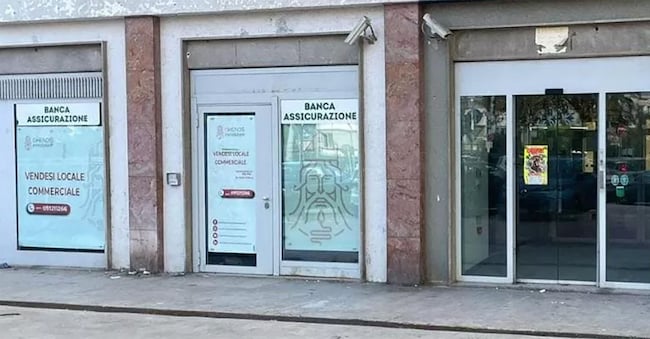
Furthermore, the reduction in the number of bank branches is perceived as a real problem: 76 per cent of Ligurian citizens say they have been greatly or quite affected by branch closures, placing Liguria amongst the regions most affected by this phenomenon. Even more evident is the value placed on banking services in local communities: 97.1% of Ligurians believe that the presence of banking services in a municipality is very or quite important, the fourth-highest figure nationally. At the same time, negative sentiment towards the reduction in the number of branches is growing: 95.4 per cent of Ligurian residents say they are not very satisfied or not at all satisfied with the closure of bank branches, “one of the highest figures recorded in the country”, notes Trucco.
‘An ATM cannot replace a branch’
Furthermore, according to the overwhelming majority of Liguria’s residents, an ATM cannot replace a branch: 91.3 per cent believe that the presence of staff and the advice they provide represent an essential added value, the third-highest figure in the country. And, should their local branch close, more than half of Ligurians (50.9 per cent) would still choose to visit another bank branch rather than rely solely on digital services. The report also highlights how the presence of a bank is seen as a factor fostering community cohesion: 75.4 per cent of Ligurians believe that the absence of a bank could influence their decision to live in or leave their local area, ‘the sixth highest figure nationally’.
The Uilca 2025 Report, Trucco argues, “paints a picture of a Liguria that regards the bank as much more than a place to carry out financial transactions: it is a bastion of inclusion, security and local development. In a context characterised by an ageing population, inland areas and small towns, the gradual reduction in the number of branches risks exacerbating regional marginalisation and the decline of local services. For this reason, the data collected point to the need to identify new organisational models capable of maintaining a physical banking presence across the region, combining digital innovation with human interaction. This is to ensure that the technological transition does not result in a decline in services for citizens and businesses’.


