
Bankitalia confirms +0.6% GDP this year, cuts 2026 estimates
In the central institute's macro projections released today (which do not take into account the measures of the recently approved Manoeuvre), it is recalled that 'Italy's GDP fell slightly in the second quarter, reflecting the sharp drop in exports'

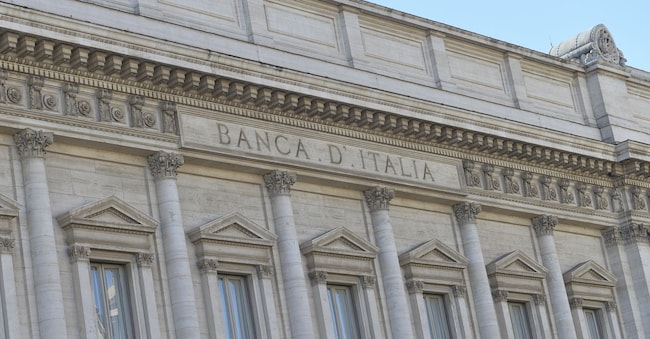
The Bank of Italy confirms its estimate of a 0.6% increase in GDP this year but reduces its forecast for 2026 to 0.6% compared to what it had estimated in June. The central bank's macro projections released today (which do not take into account the measures of the recently approved Manovra) note that 'Italy's GDP fell slightly in the second quarter, reflecting the sharp drop in exports'. In the summer months, the Italian economy would have returned to expansion, albeit modestly, reflecting the rise in investments and the slight increase in consumption.
Families cautious about consumption in 2025
This is what the Bank of Italy emphasises in its economic bulletin in which it points out that "among households that report a contraction, high prices are the main reason; among the less affluent households, a decrease in income also has an impact, while among the more affluent households, precautionary reasons also play a role." "Households' purchasing intentions remain marked by caution due to the high level of uncertainty in the international context, especially among those with greater economic difficulties," it reads.
Slow wage increase but above inflation
Rallenta la crescita delle retribuzioni in Italia che che “resta tuttavia al di sopra dell’inflazione”. Secondo quanto emerge dal bollettino economico della Banca d’Italia “in primavera l’incremento delle retribuzioni contrattuali nel settore privato non agricolo si è attenuato (al 3,2 per cento nel secondo trimestre su base annua, dal 4,4 del periodo precedente. In un contesto di debolezza ciclica, le retribuzioni orarie di fatto hanno continuato a salire, ma a tassi inferiori (al 2,8 per cento, dal 4,1)”. L’istituto centrale nota come “in termini reali, le retribuzioni contrattuali e di fatto erano ancora al di sotto dei valori del secondo trimestre del 2021 (del 6,9 e dell’8,5 per cento, rispettivamente), mentre nell’area dell’euro quelle effettive avevano quasi completato il recupero”. L’indebolimento della dinamica salariale, che ha interessato sia la manifattura sia i servizi, ha contribuito a contenere l’aumento del costo del lavoro per unità di prodotto . Il rallentamen

