
Bankitalia: in Lazio 'subtle growth' Confidence from investments
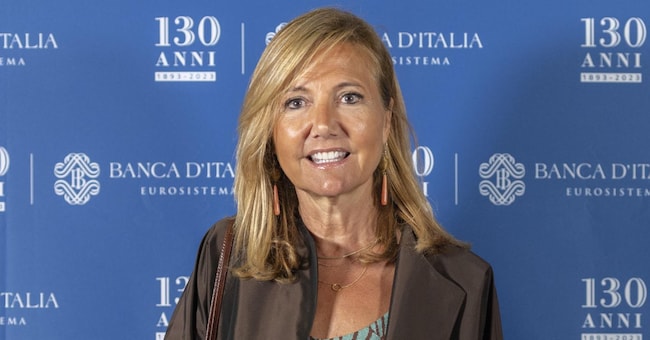
Scenarios. Antonella Magliocco, the new director of the Rome office, speaks: 'Peaceful optimism. From enterprises positive expectations for the Jubilee 2025".

3' min read
3' min read
Themost recent positive sign comes from exports: in the first quarter of this year, exports by companies in Lazio posted a good +8.5% compared to -9.7% in the same period in 2023. Antonella Magliocco, who has been at the head of the Bank of Italy's Rome office for just a few months, cites this figure to explain the outlook for Lazio's economy. Magliocco, from her brightly-lit office overlooking Via XX Settembre, in an interview with Il Sole 24 Ore, highlights some of the points brought into focus by the latest report on the region's economy.
His remarks always end with a call for caution, as is the DNA of a central banker. "Growth is there but it is contained, I would say subtle," he says: "We need to be calmly optimistic, the expectations of companies tell us so; extraordinary events, such as the Jubilee, can give us hope for the current year in terms of growth. The Bank of Italy has an estimate of 0.6-0.7% for the national figure and Lazio should not deviate in a negative direction, indeed the hope is that it will do better.
It is difficult to interpret the numbers of the economy of Lazio, a region with peculiarities all its own, due to the presence of large multinationals flying the tricolour flag, and the central role played by the public administration. A region economically dominated by the weight of the Capital, which has fared worse than other major European cities in the last twenty years, but which still has strengths, sometimes little known, such as the considerable weight of public research, knowledge-intensive services and the high birth rate of enterprises.
The latest report on regional economies 2023 has put a spotlight on multinationals and Lazio can have its say. "Multinationals are undoubtedly a driving factor for the region," explains Magliocco, who can count on a large staff dedicated to regional economic research at the headquarters, which does not, however, have an easy time in attributing, for example, what share of spillover effects the activities of giants such as Eni or Enel have on the territory. The large energy companies absorb almost half of the added value of industry in the strict sense, but this, they remind us from Via XX Settembre, is only a small slice, in a region dominated by services.
However, multinationals have taken their toll in the long run: Lazio has not yet recovered the level of GDP it had in 2007, it is lagging behind the country that has closed that gap. But if the delay is only small, it is due to the productivity of large companies. This does not detract, Magliocco continues, from the important role of Lazio's micro enterprises in terms of employment and added value. The region, with a per capita GDP of more than 37,000 euro, which is higher than the Italian average, does not present high criticalities if one looks at the financial conditions of households.

