
Bankitalia, Panetta: more strategic autonomy for Europe depends on relaunching the economy
In Dublin, guest of the Central Bank of Ireland at the 'Whitaker Lecture' dedicated to former Irish central banker Thomas K. Whitaker

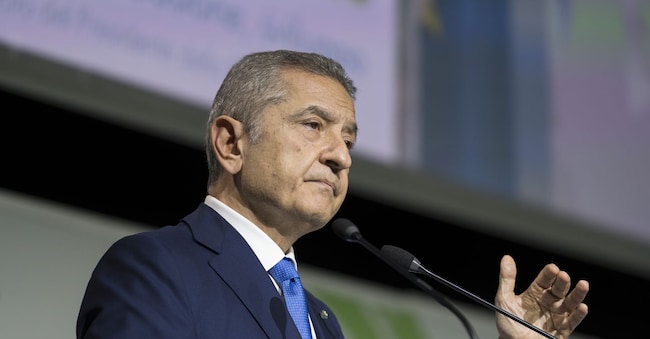
"In order to strengthen its strategic autonomy, Europe must focus on three factors, the first of which is "the relaunch of the economy," says Fabio Panetta, Governor of the Bank of Italy, speaking in Dublin as a guest of the Central Bank of Ireland on the occasion of the 'Whitaker Lecture' dedicated to the former Irish central banker Thomas K. Whitaker, and recalls how the policies to relaunch the European economy are now well known and "must now be pursued with urgency: more investment, greater capacity for innovation, further liberalisation and full integration of national markets. These are the foundations of Europe's competitiveness and strategic autonomy'.
European safe asset
This,' he emphasises, 'is the first condition but there are two others,' the Governor continues. The second is more liquid and integrated European capital markets. The Italian central banker raises the safe asset theme: 'A particularly transformative step would be the creation of a common European safe asset. A greater supply of risk-free, euro-denominated securities would attract global investors and foreign central banks seeking diversification. It would give the euro the financial structure that other major currencies already enjoy'. The third condition, says Panetta, is the completion of the digitisation of the financial infrastructure.
Weaker dollar, multipolar system has opportunities and risks
For the governor, the international monetary order is changing under the impetus of both slow and rapid processes, such as technology, and the weakening role of the US dollar may lead towards a multipolar monetary system, which presents both opportunities and risks to be governed. "Multipolarity could increase diversification, distributing the burden of global liquidity supply and reducing global dependence on the US policy cycle. But it could also amplify volatility and contagion risks," Panetta says in the text of the speech. 'In such an environment, international policy coordination becomes more difficult, although it would be sorely needed'.
US share of world production halved in 75 years
The US dollar-based system remains dominant, Panetta recalls, but the foundations of this dominance are weakening. "The share of the US economy in world output has halved in the last 75 years: measured in purchasing power parity, China overtook the US about a decade ago". After the change in US trade strategy with the imposition of tariffs, the international system could change, with "a reconfiguration of global value chains and a regionalisation of trade: developments that could strengthen the attractiveness of 'regional' currencies such as the euro and the renminbi". Both the Chinese and European currencies lack all the requirements that could make them global reserve currencies. In the case of the euro, already the second international currency, 'its limitation is the incompleteness of its financial, political and fiscal architecture. Fragmented European capital markets and slow institutional integration prevent the euro from achieving the scale and coherence of the US system'.

