
Panetta: risks to growth and inflation from war
Governor's Report to the Ordinary Meeting of Participants. An environment of high uncertainty is being consolidated, which is likely to continue beyond the acute phase of the conflict

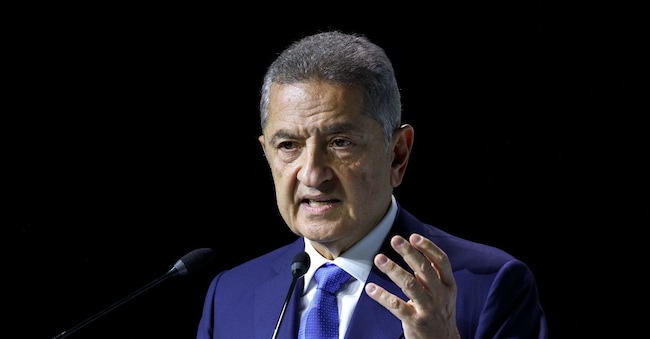
The war (in the Middle East area) changes the global economic scenario: risks emerge for growth and inflation, which had fallen and allowed monetary policies to be eased. Now things change: 'Tensions with Iran, which escalated in the spring of 2025, have turned into a wide-ranging military confrontation that now involves the Middle East, an area crucial for the global supply of energy and essential raw materials'.
The Governor of the Bank of Italy, Fabio Panetta, makes this clear in his report to the ordinary shareholders' meeting (the one approving the balance sheet): 'The exports through the Strait of Hormuz have come to a near halt and significant damage to production and refining infrastructure is emerging. Even in the event of a rapid cessation of hostilities, a return to orderly conditions in the energy market would take time'.
Rise in oil and gas weakens growth prospects
Panetta recalls that 'the most immediate effect of the conflict has been a strong increase in gas and oil prices, with a consequent weakening of growth prospects and new inflationary pressures. More generally, an environment of high uncertainty is being consolidated, which is likely to continue beyond the acute phase of the conflict'. In this context, in 2025 economic activity in the euro area was showing signs of strengthening, sustained by the recovery of investments and the consolidation of consumption: 'Even in Italia, GDP growth was driven by investments and the recovery of household purchasing power. Last December, it was expected that the domestic demand would continue to make a positive contribution in the current and subsequent years'. On the effects of the crisis with respect to growth Bankitalia will make its forecasts known in the Economic Bulletin next Friday.
Monetary policy faces a negative supply shock, as in 2022
Thus,' Panetta reiterates, 'the conflict in the Middle East abruptly changed the outlook. The financial markets reacted with a rise in yields and risk premiums, a fall in share prices and a weakening of the euro. Short-term expectations on inflation and official rates were revised upwards. Uncertainty and tightening financial conditions have rekindled fears of a deterioration in credit access conditions'. Monetary policy is thus again faced with "a negative supply shock in an environment of high uncertainty, as was the case in 2022 in the aftermath of Russia's invasion of Ukraine. According to the ECB's recently released projections, inflation would be above target in 2026, with a gradual return in the following year, and economic growth would be lower than previously estimated. If the energy shock turns out to be stronger and more persistent than projected in the baseline scenario, inflation would increase further while growth would be weaker'.
But compared to the Ukraine crisis, the ECB is in a better position for price stability
In short, compared to 2025 - when the ECB cut rates by 100 basis points - things have changed: 'Significant increases in commodity prices could result from damage to energy infrastructure; in addition, possible disruptions in global value chains could translate into price increases for intermediate goods, accentuating consumer price pressures. The intensity of these effects will depend crucially on the transmission of shocks to wages and the impact on expectations, with the risk of a vicious circle between prices and wages'. However, "compared to 2022, monetary policy is now in a more favourable position to safeguard price stability: official rates are in line with the estimated level of the neutral rate; medium- and long-term inflation expectations are anchored; and labour market conditions are less tight. Moreover, the banking system as a whole shows high profitability and a solid capital position'.


