
Banque de France, a painful OK for the appointment of Emmanuel Moulin as governor
The Assemblée expresses a contrary opinion, but the outcome of the vote in the Sénat prevents the parliamentary veto from being triggered

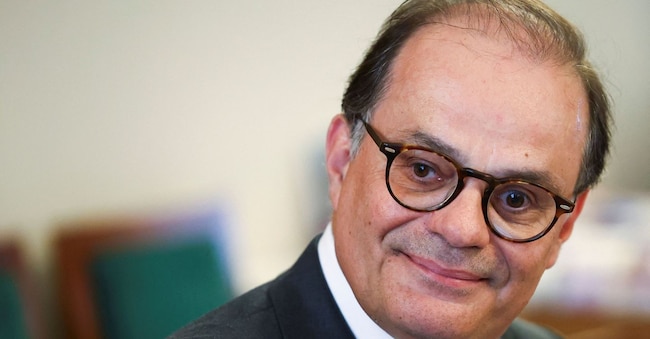
A non-binding rejection. There are no longer any obstacles to the appointment of Emmanuel Moulin to the post of governor of the Banque de France, despite the parliamentary no. A former director general of the Ministry of the Economy under Bruno Le Maire, former head of cabinet of Prime Minister Gabriel Attal, former secretary general of the Elysée Palace under Emmanuel Macron (and formerly a former executive of Mediobanca), Moulin can take the place of François Villeroy de Galhau, who will leave the post at the beginning of June, before the end of his term initially scheduled for 31 October 2027.
Veto avoided thanks to the Sénat
The French Parliament's attempt to block the nomination, desired by the President of the Republic, therefore failed. The Finance Committees of the Assemblée nationale and the Sénat cast a total of 58 votes against his candidature, and only 52 votes in favour. However, due to the very favourable result in the upper chamber, where the radical parties are underrepresented, the opponents did not reach the three-fifths quorum (equal to 66 votes) required by Article 13 of the French Constitution for a negative opinion to have the value of a veto. There are no obstacles, therefore, to the signing of the decree by the Council of Ministers, expected in the coming days, which will entrust Moulin with a six-year mandate, renewable once.
Counsellor to the Prince
Born in Versailles, a Protestant, initially close to the left - Michel Rocard, but also Pierre Moscovici - Moulin then moved closer to Nicolas Sarkozy, building for himself a role as advisor to the prince. His past at the head of the Ministry of the Economy, where the governors of the Banque de France are traditionally selected, made him one of the natural candidates, along with Agnès Bénassy-Quéré, the second sub-governor, Laurence Boone, economist and former Secretary of State for European Affairs, or Benoît Cœuré, former member of the ECB board and now president of the Paris Antitrust Authority. A skilled imitator of other people's voices, Moulin even 'dubbed' Sarkozy in the film Neuilly sa mère, sa mère ! by Gabriel Julien-Laferrière. He was also deputy head for France and Benelux for Mediobanca.
Macron's race for appointments
The early handover between Villeroy de Galhau, who has resigned, and Moulin seems to be part of Macron's policy of anticipating as much as possible the appointments of the highest offices of state in fear of a victory of populist forces in the 2027 presidential elections: Marine Le Pen's Rassemblement national (or Jordan Bardella), but also - a much less likely hypothesis - Jean-Luc Mélenchon's La France Insoumise. The president has already appointed Richard Ferrand as president of the Conseil Constitutionnel and Amélie de Montchalin, former minister of public accounts, as head of the Court of Auditors.
The Node of Independence
Moulin's closeness to Macron - he was Secretary General of the Presidency until 6 May - was repeatedly reproached during his hearing before the parliamentary committees. "I am a free man," he told deputies and senators. "I am committed to exercising my functions in total independence, with total impartiality towards both the executive power and private interests," he added. Even the Socialists, who have often allowed Sébastien Lecornu's government to continue in office at this stage, spoke out against his appointment because his figure did not guarantee 'the political independence indispensable to the function of central banker'. An agreement with the Républicains, albeit denied, would have helped break the deadlock: the former Gaullists, who are very strong in the Sénat, may have obtained, according to press rumours, the appointment of François-Noël Buffet to the post of Défenseur des droits: Claire Hédon's non-renewable mandate expires on 22 July.


