
Seals at Norman bar and parcels stopped, Postalcoop employees without pay
The investigation counts 38 suspects and unmasks a complex system of illegal labour interposition through a network of paper companies

"The tank companies do not pay contributions or taxes. In a few years they accumulate huge debts to the treasury. They are therefore abandoned to their fate: new tank companies are created, which take on all the employees of the previous companies.
The summary by the judge of the Court of Turin, Lucia Minutella, explains well how the system that emerged from the investigation, carried out by the economic-financial police unit of the Turin Finance Police, worked. The investigation counted 38 suspects, nine of whom were the recipients of a EUR 26.5 million seizure order, and unmasked a complex system of illegal labour interposition through a network of paper companies, invoices for non-existent transactions, and illegal labour supply contracts disguised as formally regular contracts.
A modus operandi that defrauds the tax authorities and drugs the market by lowering the cost of labour in one of the most fragile sectors, logistics. The repercussions on the two thousand or so workers caught up in this system are enormous: they are moved like parcels from one company to another, to guarantee higher turnovers for the companies involved, thanks also to the extremely low labour costs offered to clients, including logistics giants such as Amazon, Sda and Gls, which can thus also outsource the associated labour and industrial relations.
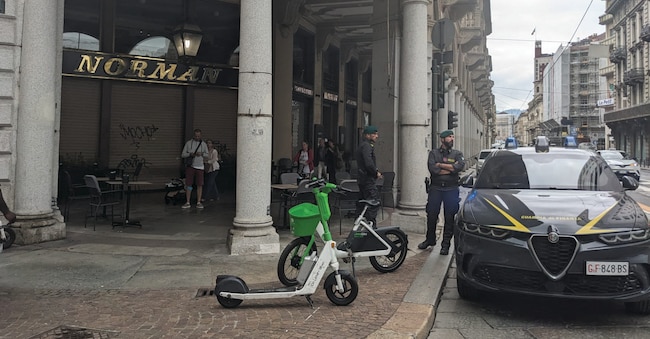
Porters and drivers were unwitting pawns in this fraudulent mechanism and today they cannot work: immediately after the blitz by the yellow flames, one of the companies under investigation, Postalcoop srl, was placed under judicial administration, which, with the act of seizure, had sealed on 10 September premises traceable to the company: among them the Norman bar, the historic bar where the Toro was founded, and two other sushi restaurants in the city centre.
The aim of the detention of the vehicles of the company involved, ordered by the judicial administration, was to immediately stop unlawful conduct and prevent the continuation of a 'time-tested' management that - as the judges wrote - 'is likely to be replicated in the future'.

