The interview

Baroncelli: ‘Revitalising Tuscan industry by focusing on aerospace and renewables’

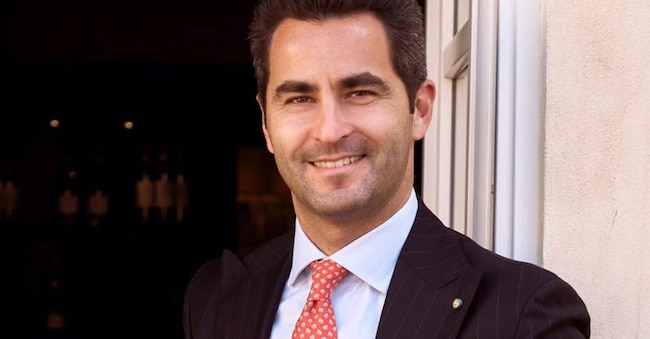
Lapo Baroncelli, President of Confindustria Toscana Centro e Costa: “Strengthening manufacturing and providing housing for workers. We are concerned about Piombino”

by Silvia Pieraccini

Aggiungi Il Sole 24 Ore
ai preferiti su Google
Lapo Baroncelli, presidente di Confindustria Toscana Centro e Costa (Imagoeconomica)

3' min read

Translated by AI
Versione italiana

3' min read

Translated by AI
Versione italiana

“Politicians must decide what they want for Tuscany: for it to be a manufacturing region or to slide into deindustrialisation.” Lapo Baroncelli, a 43-year-old Florentine, has been hammering home the message of reindustrialisation ever since he was elected president of Confindustria Toscana Centro e Costa (Florence, Livorno and Massa-Carrara) last March.

Mr President, Tuscany is experiencing modest growth, up 0.5 per cent this year. Where can we start to turn things round?

Loading...

Through industrial policy, which must put manufacturing back at the heart of our economy – as the driving force behind development, GDP and high-value-added skills. We have the opportunity to bring back to our region certain functions that we have lost over the years; let’s do it.

In which sectors?

Firstly, in the aerospace sector: we can capitalise on the Leonardo Group’s well-established presence to develop the supply chain and attract skilled workers. This would amount to a reshoring of skills, a way of combating the ‘low-quality’ work that currently exists. We need an aerospace cluster.

Who should create it?

This is a matter for the public authorities. We must act as a catalyst, but it is up to politicians to decide what sort of Tuscany they want: one based on manufacturing or one that has been deindustrialised. And to revitalise manufacturing, we need housing for workers.

Do you have a home design project?

Together with the City of Florence, we have developed a housing unit designed by architect Marco Casamonti – a standardised flat intended to tackle the housing crisis that is hindering recruitment. We have also identified the plots of land on which to build them. Workers would be able to pay a controlled rent and buy the flats over time.

One of the sectors facing difficulties is the fashion industry, which is vital to this region. Has the crisis that began three years ago come to an end?

Loading...

No, the crisis is still very much with us, particularly for the SME sector. Together with the Sant’Anna School, we have launched a project to try to retrain companies specialising in metal accessories – such as buckles and chains – by applying their mechanical and metallurgical expertise to other sectors such as robotics, the nautical industry and component manufacturing. With PwC, on the other hand, we have been working on the leather goods sector: we cannot afford to lose these skills; although fashion consumption has fallen, we must re-engineer the cluster.

 Tuscany is lagging behind in the installation of renewable energy sources set out in the National Plan for 2030. How can this be speeded up?

The energy issue is crucial if we want to have an industrial region. We must have the courage to make tough choices. My message to politicians is this: we cannot always prioritise the landscape. We need to focus on areas suitable for renewable energy, where procedures will be streamlined. And then we will have to start talking about nuclear power again, even in our own region.

Let’s take a look at the Tuscan coast. In Piombino, the new 3.2 billion steelworks, which was due to be built by the Ukrainian firm Metinvest, has run into difficulties. Are you concerned?

We are concerned, but precisely because of these difficulties, I say we should support those who are willing to invest, such as JSW Steel Italy, which is about to launch a project in Piombino that will transform the former Lucchini steelworks through the installation of a new rail production line: this is an important part of the region’s reindustrialisation.

Livorno, on the other hand, has been waiting 30 years for the Darsena Europa, which is intended to expand the port to accommodate large ships…

The issue is always that of the time taken to obtain planning permission, which drives up costs. It is a decisive factor for potential investors, just as it is with the new runway at Florence Airport: it was supposed to cost 300 million, but costs have now risen to 650 million. Both Darsena Europa and the new runway are key factors in the region’s competitiveness.

How do you envisage Florence and the coast in ten years’ time?

We stand to gain incredibly if these projects are carried out swiftly. Otherwise, we will all lose out.

Copyright reserved ©
Loading...

Brand connect

Loading...

Newsletter

Notizie e approfondimenti sugli avvenimenti politici, economici e finanziari.

Iscriviti