
Barriers, people, opportunities: semantic shifts in accessibility

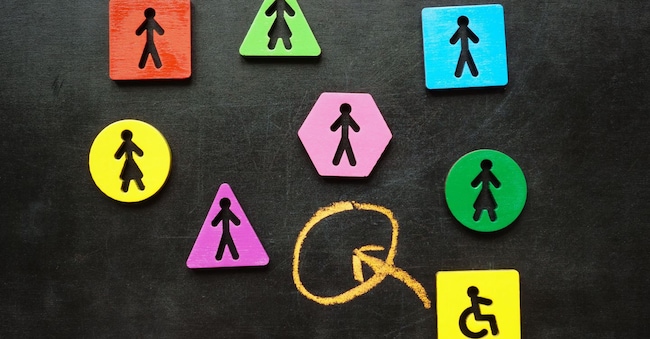
Since the beginning of this century, a real revolution has affected the concept of disability and, in parallel, that of accessibility. This revolution has essentially developed along two lines. On the one hand, there has been an expansion - almost to the point of dilution of its semantic value - of the word 'accessibility', now used interchangeably in both a concrete and abstract sense and applied to the most diverse contexts: from the design of children's parks to post office counters, from texts adapted for people with intellectual disabilities to the usability of POS keypads.
The second direction concerned a radical change in the polarity of the concept of accessibility. From a negative valence, in which access is perceived as non-existent because it is impeded by barriers, there has been a gradual shift to a neutral position: at the centre of this renewed concept of accessibility, which has become widespread since the end of the first decade of the century, there are no longer barriers but people. Not obstacles to be overcome, but human beings with their different abilities and needs. From a minus sign, therefore, we have moved to a zero position, that of the person, all people.
This shift from the negative pole to the neutral value was accompanied by a significant re-evaluation of the social role of people with disabilities, fostering a pro-active attitude on the part of institutions, bodies and social groups and finally giving disabled people a visibility that is as much due as it has been denied for too long.
In recent years, a further evolution along the polarity axis has pushed the concept of disability from the neutral position towards the positive end: with this latest movement, the focus is no longer on people - still potentially represented through their limitations and deficiencies - but rather on opportunities. Accessibility thus moves from 'less' to 'more', charging itself with a positive valence that should hopefully and increasingly permeate every application of the term.
The opportunity-based model that redefines accessibility is actually not entirely new. It was discussed, among others, by Amartya Sen in the 1999 volume Development as Freedom, in which opportunities for people with disabilities are represented as forms of freedom and independence. More recently, this new positive paradigm has been elaborated by Cascetta, Cartenì and Montanino, who in 2016 developed a behavioural model aimed at defining accessibility precisely in relation to opportunities: those available, those potential and those desirable.

