The Mediobanca report

Banks, with Basel III discount on asset manager acquisitions

Reduced capital absorption if the insurance subsidiary buys. The example of Bnp, which acquired Axa's asset management via Cardiff

by Alessandro Graziani

Il big francese. Il gruppo ha rilevato l’asset management di Axa

2' min read

2' min read

The new rules of Basel III open up unexpected growth opportunities for European banks. Not only in the insurance sector, thanks to the capital discounts introduced by the so-called 'Danish compromise'.

But also in asset management, provided the acquisition is made by the banking group's insurance subsidiary. Outlining the new regulatory scenario, with the consequent implications for the sector, was a detailed report by Mediobanca Research yesterday which, as Co-head Andrea Filtri summarises, 'highlights the potential opening of new and wider M&A frontiers for banks' thanks to the application of what analysts now refer to as 'the Danish compromise squared'.

Loading...

The French shot

.

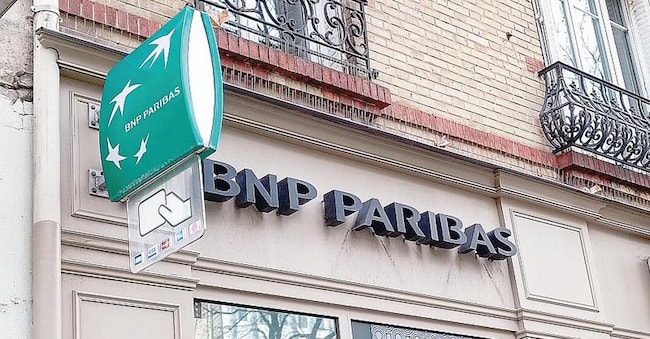
The first to exploit and benefit from the new regulatory framework were the French Bnp Paribas, which a few weeks ago announced the acquisition of Axa Investment Managers from Axa for EUR 5.5 billion.

The purchase was not made directly by Bnp nor by Bnp Paribas Asset Management, but by the insurance subsidiary Bnp Cardiff. And thanks to the new Danish compromise rules, according to the estimates of Mediobanca Research, the maxi acquisition in asset management will determine for the group a capital absorption Cet1 of only 25 basis points or 2 billion (against the 65 points, or 5 billion, of reduction that there would have been in case of direct shopping by Bnp).

This is a considerable advantage, so much so that analysts point out that "banks that are not yet bancassurers should soon reconsider this choice" and aim "to acquire insurance companies and then, through these, purchase assets or wealth managers in transactions that before the new rules were considered unfeasible due to excessive capital dilution".

LA STRUTTURA DI BNP PARIBAS

Loading...

Eba's 'regulatory clarifications'

.

From a technical-regulatory point of view, such a benefit for banks is not explicitly provided for in the Danish compromise but, according to Mediobanca analysts, derives from subsequent 'regulatory clarifications' of the regulatory application that were most likely provided by the Eba.

Not all European banking groups benefit from the capital advantages of the Danish compromise, but those recognised by the ECB Supervision as Financial Conglomerates (Fi.Co.), i.e. banks that have consolidated a significant insurance company. In the register of so-called Fi.Co. held in Europe by Esma, there are currently 63 significant banking groups. Of these, according to the list published in the report, seven are Italian: Intesa Sanpaolo, UniCredit, BancoBpm, Mps, Generali, Mediolanum and Credito Emiliano.

Potential benefits

.

How many European banks will follow the example of forerunner Bnp Paribas by launching into asset manager acquisitions thanks to the 'capital discount' of the new regulations? It is too early to say, although Mediobanca analysts are already quantifying the potential benefits: against an erosion of 100 basis points of Cet 1, this would generate a double-digit increase in eps (earnings per share) and a return on investment (Roi) of up to 41%.

For 'purely illustrative' purposes, Mediobanca Research has hypothesised the benefits of seven possible combinations between banks and asset managers, should the acquisition be carried out by the insurance subsidiary. Two hypotheses concern Italian banks: Intesa Sanpaolo-Dws (Deutsche Bank group) and BancoBpm-Anima. In both cases, the acquisition would generate a capital absorption of less than 1% of Cet1 with an increase in eps of more than 10% and a Roi of around 35%.

Copyright reserved ©
Loading...

Brand connect

Loading...

Newsletter

Notizie e approfondimenti sugli avvenimenti politici, economici e finanziari.

Iscriviti