
Basel conquered by Eurovision fever
Between art and sequins, the Eurovision Song Contest final lights up the city with shows, exhibitions and thousands of fans in the streets of the city centre

3' min read
3' min read
The Eurovision Song Contest is taking place in Basel (tonight at 9pm, the final, live on Rai 1 and simultaneously on Rai Radio 2 and RaiPlay) and the city is plastered with posters reading: All you need is Basel. The story behind this Beatles-inspired slogan is a curious and little-known one: in 1967, two Picasso masterpieces - The Two Brothers and Sitting Harlequin, on loan to the Kunstmuseum Basel - were in danger of being sold abroad by their owner, a collector who had gone broke. The young people of the city mobilised: they collected signatures, marched through the streets and, to the cry of 'All you need is Pablo', convinced the citizens to vote in a referendum. The cantonal administration allocated over six million francs to buy the paintings and keep them in the city. Picasso, moved, donated four more works.
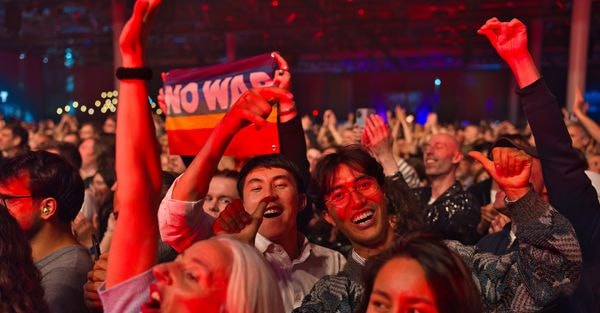
It is not just a beautiful story: it is an indication of how seriously - and passionately - Basel takes art, in all its forms. So, while the lights of the most glittering show on TV are turned on at the St. Jakobshalle, the whole city gets carried away: as then for the paintings, today for the music. With the conviction that art, yes, is a serious thing, but also something to be celebrated, with due enthusiasm.
Beyond the show, through the city streets
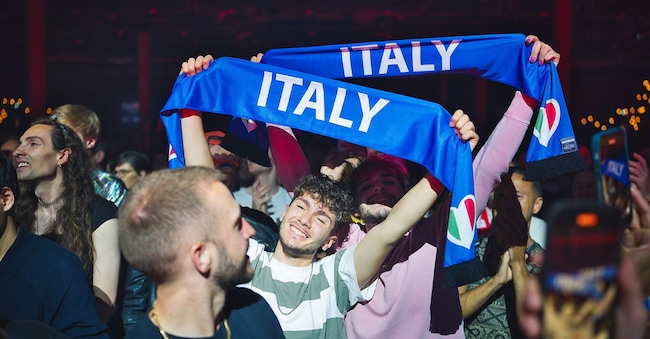
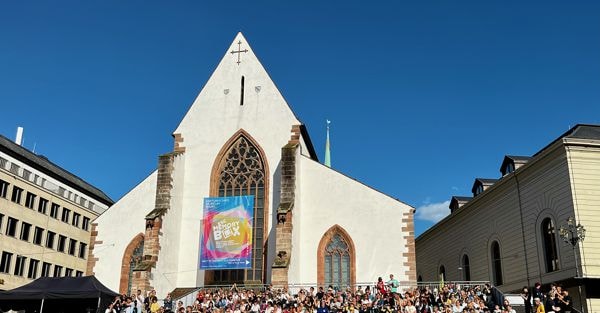
.Street performances and impromptu karaoke can be seen in the old town. Some set up a flying workshop for sequined make-up. There are several stages scattered around the squares and courtyards, including a few simple wooden plinths that host street performers, without distinction: from the elderly Baselite who sings the songs of yesteryear to the folk guitarist who picks up her guitar, barefoot, a kind of Joan Baez catapulted onto the banks of the Rhine. Under the signs of the beer gardens set in the half-timbered houses, ABBA is played, a tribute to the most famous winners in the history of the Eurovision Song Contest. There is toasting and dancing at the tables, among feather boas, pink wigs, unlikely jackets and flags everywhere: waved, worn, painted on faces. Some wear that of the European Union like a Superman cape, and patience if today those stars on a blue background might look a little faded. At Barfüsserplatz people sing until the wee hours, because if it's a party, it's a party indeed and there is room for all genres, from hip hop to electronica. The trams run late into the night, bringing home anyone who still feels like dancing. Not far away, the Stadtcasino, renovated by Herzog & de Meuron, the local wonderland duo, observes the urban euphoria with composure.
Themed exhibitions
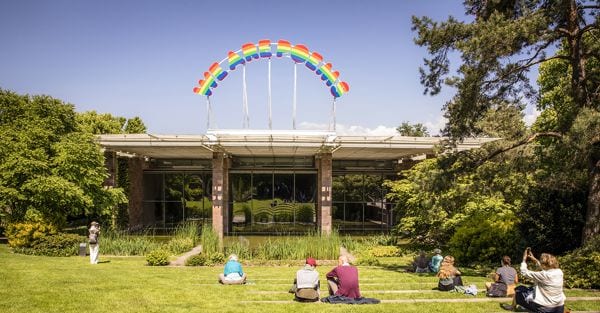
.Even art has decided to play along: the Fondazione Beyeler is hosting Over the Rainbow, an exhibition with a selection of works 'in Eurovision tones' and Ugo Rondinone's large light installation soars over the roof of the building designed by Renzo Piano: We are poems. The Natural History Museum also got caught up in the ESC spirit with its Glitter and glamour exhibition: it set up the 'world's smallest disc' in an old telephone booth, brought back its famous unicorn and hosted a DJ set in the inner courtyard.
So Basel, city of high art and Art Basel, lets loose. It flirts with kitsch, plays at being marine, welcomes an enlarged Europe (Israel is also competing, Australia was eliminated in the semifinals) with the lightness of one who knows that one can be serious even without taking oneself seriously. So yes: for a few days it's all right. Sequined dresses, confetti, a bit of levity, streams of people crowding the streets (200,000 people so far, according to official figures) and a city that doesn't say no to those who want to sing. And let's not confuse it with a village festival to the nth degree. Because those who dismiss Eurovision as a sideshow may not know that there is more to it than what you see on TV. It is no coincidence that all this is happening in Basel: a border city, a European laboratory by vocation, which has always been a crossroads of languages, cultures and visions. Where people speak German but think French, where one arrives on foot from Germany or by tram from France. A place that knows what it means to be on the edge.

