
Basil, record crop growth (also in open field) with the worldwide success of pesto
Production has increased more than 2.5 times in 15 years: in 2025, Italia exceeded 86,000 quintals, making it second in the world, behind India and ahead of the USA

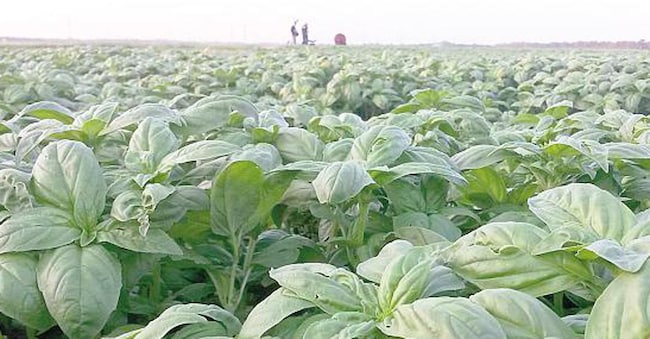
No longer consider it a minor crop. With a production that has increased by more than 2.5 times in 15 years and a (mainly industrial) demand that has been growing uninterruptedly for years, basil has conquered a place in the sun among aromatic herbs. In 2025, Italia exceeded 86,000 quintals (Istat data), confirming second place in the world, behind India and ahead of the USA, in a sector in excellent shape. Today globally it is worth 63.2 million dollars but by 2033 it will reach 82.7 million, estimates the business intelligence company Global Growth Insights, with a Cagr growth of 3.42%, thanks to increased use in many products, such as food, drinks, supplements and cosmetics.
In Italia, it is still the use in cooking that is the main one, especially in the industrial sector in the flourishing world of pesto, the protagonist of an authentic boom in both catering and modern distribution, where total sales have exceeded 230 million euro and 27 million kg (source: Niq). Pesto is not just an Italia but a global success: it is the world's best-selling raw sauce and represents a Made in Italy excellence, known and loved all over the world. This is confirmed by the World Pesto Genoese Mortar Pesto Championship, the 11th edition of which will be held on Saturday 21 March, in which the 100 competitors (including around 20 foreigners) who have passed the national selections held in various countries will compete.
"Since pesto has become a term in common use and its recipe cannot be protected by PDOs, we felt the need to defend the traditional version and make it known through the championship, which attracts the interest of the media halfway around the world," explains organiser Roberto Panizza.
The success of pesto has boosted Italian basil production both in the open field and in a protected environment (greenhouse, tunnel, shade), with different methods and seasonality depending on the final use. The one to be consumed fresh is available all year round, while the one intended for industrial processing is sown in spring and harvested in 4-6 mowings from the end of June to mid-October. Cultivation has now spread beyond traditional Liguria. Thanks to vertical farming, basil has also arrived in cities such as Florence and Turin, and has taken the place of other crops in the Po Valley, from Pavia to Parma, where it has been introduced since the 1990s at the instigation of local canning companies. And of Barilla in particular, which, as the world leader in the pesto market, buys only Italian basil for its pestos, sauces and salsas and has launched a training programme for farmers focused on sustainability. In 2025, also in the Parma region, Casalasco invested more than EUR 10 million to create an integrated basil supply chain.
Between Italia and abroad, 150 processing companies (such as Rana and Mutti) buy Basilico Genovese DOP, which is distinguished by its medium-small, oval-shaped, soft-green leaves and delicate aroma, and of which the PDO specification - which is celebrating its 20th anniversary - requires that only the apical part of the plant, the most tender and fragrant, be cut.

