
Basilicata, health migration a ballast for the regional budget
Crisis. One of the main causes of the 50.39 million deficit. Commissionerisation has been averted for this year with funds from the agreement with Eni and Shell Italia, but structural corrective measures are being studied

3' min read
3' min read
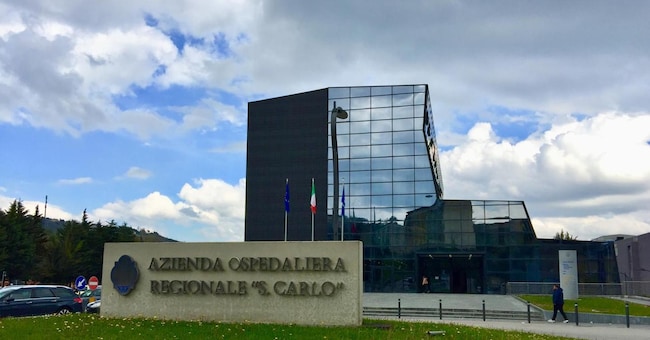
No commissionership for Lucanian healthcare due to the 2023 operating deficit of EUR 50.39 million of the regional health service: thus protecting Lucanian citizens from increases in healthcare co-payments or other tax rates that a possible recovery plan would have led to. The Ministry of Economy and Finance has recognised the effectiveness of the financial coverage of the consolidation of Lucanian healthcare companies prepared by the President of the Basilicata Region, Vito Bardi, in his capacity as Commissioner ad acta. With a variation to the 2024/2026 budget for the 2024 financial year, he identified the necessary resources in the regional budget: EUR 28.82 million to cover the deficit of the ASP (Potenza Local Health Authority); EUR 13.99 million for the ASM (Matera Local Health Authority); EUR 8.03 million for the AOR (San Carlo Regional Hospital Authority of Potenza) and EUR 463,000 for the IRCCS/CROB of Rionero in Vulture. Funds earmarked for the Companies, recovered by drawing on the approximately 50 million euro from the Development Projects Agreement signed between the Basilicata Region, Eni and Shell Italia E&P for the co-financing of a new organisational model for the regional healthcare network with a 'One Health' perspective.
In this way, 'the investments made in 2023 by the regional health agencies were guaranteed, which concerned in particular,' explained Bardi, 'proximity medicine and the powerful plan to stabilise staff, which complement the other substantial investments underway with the PNRR'.
Everything resolved, then, at least for this year. But turning the spotlight on Lucanian healthcare, the region's main budget item, is the Bank of Italy's latest annual report 'The Economy of Basilicata'. In 2023, the cost of healthcare facilities under direct management and in agreement located in the region will be added to the cost of reimbursement for care provided to citizens receiving treatment in other regions. In Basilicata, as in the average of the regions of the Mezzogiorno, these outlays continue to exceed the revenues connected with the services provided by the Lucanian healthcare institutions to residents outside the region.
In 2022, according to data from the National Agency for Regional Health Services (Agenas), in Basilicata the total cost of passive mobility was about 95 million, equal to 178 euro per capita (in the South 71 euro). Considering actual hospital mobility (due to patient choices), the outflow index is 34.6% in 2022, more than 17 percentage points higher than in the South. The region's small geographical size and infrastructural endowment contribute to high proximity mobility (12%, about twice as high as the average) almost half to Apulia; lower percentages for Lombardy, Lazio and Campania. The main pathologies for which admissions outside the region are preferred are those of the musculoskeletal system (hip and knee prostheses) and oncological diseases (breast and prostate cancers).
What strategies should be adopted to avoid a repeat of deficit situations in 2024? We asked the Director General of the Basilicata Region's Health Department, Massimo Mancini. "I have asked the MDs of the individual companies to provide a spending recovery plan very quickly: it is the budget of each company that must be the beacon. Where there are major expenses noted in the past, that is where action must be taken to resolve or reduce them and in any case manage them. If the problem persists, it is obvious that something is wrong'. There are three paths to follow: 'reduction of pharmaceutical expenditure; reduction of passive mobility by expanding the services that are suffering the most; prior authorisation of all expenditure for the purchase of goods and services, which do not pertain to the essential levels of assistance'.

