
Battery storage, over 1 GW already authorised in August
Since May, the Ministry of the Environment has given the green light to 39 projects totalling 3.7 GW: more than in the previous 12 months
3' min read
3' min read
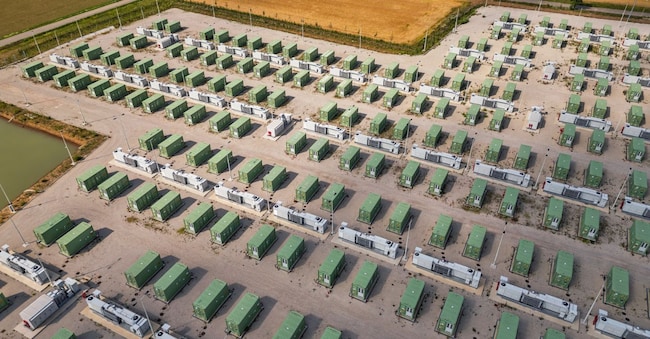
Strong acceleration for electricity storage systems using batteries: in August, the Ministry of the Environment authorised eleven projects with a capacity of 1,006 MW. In July, it gave the green light to twelve plants, for 1,114 MW. In June to three projects for 300 MW and in May to another thirteen, for 1,249 MW. In total, in less than three and a half months, net of amendments and corrections, 39 battery systems for 3,669 MW have been authorised, exceeding the previous 12 months. In the last Mase report for the year between April 2024 and April 2025, 23 projects for 3,098 MW had been authorised. Between April 2024 and April 2023, the quota reached 900 MW for seven plants. Among the territories, a lot of Central and Southern Italy: Lazio, Campania, Puglia. Among the proponents, in addition to historical operators such as Enel, young players such as Sphera Energy, of the Faenza-based Combigas group, or Vexuvo (Greenergy and FF Ventures), and even international ones such as the Koreans of Hanwha.
"Since April there has been a very strong acceleration," confirms Fabio Zanellini, coordinator of Italia Solare's storage working group: "For the Macse (Terna's storage procurement mechanism, ndr), whose first auction will be on 30 September, there is no fear of going short. We knew that the ministry had a queue in disposal, which is why as an association we had proposed moving the date back to allow more participation. On the authorisation report up to April 2025, it said that 277 projects were being evaluated, with a total capacity of about 30 GW, and evaluations were to be started for 152 projects, for a further 23.5 GW.
In Italy 6.7 GW of batteries
.According to Italia Solare's elaboration of Terna data, as of 30 June 2025 in Italy there were batteries (excluding pumped storage) for 6.7 GW of power, of which 1.6 stand alone (to support the system) and the others integrated with renewable plants, especially solar (5 GW). Translated into storage capacity: 16.4 GWh in total, of which 6.2 stand alone and 10 integrated with solar. "We can then estimate over 30 GWh of authorised installations. Although they will certainly not all participate in the Macse, which starts by auctioning a capacity of 10 GWh, it will be a competitive procedure,' says Zanellini. The difference between power and storage capacity is an issue: 'The Mase data characterises projects in power (MW or GW), but the auction is held on the basis of storage capacity (in MWh or GWh). It would be appropriate to make public the complete data of the authorised projects, qualified on the parameters required for participation in the auctions,' Zanellini emphasises. 'The estimate we make at the moment is that the first one, in September, will be worth about 2.5 GW.
For Terna, a maximum of 5.5 billion
.Another issue is time certainty: 'Operators already need to know when the next auctions will be, in order to make their planning. According to Terna, the Macse should supply 50 GWh by 2030, practically all in the south and the islands. It is an important tool, unique in the world, so much so that it is making numerous foreign operators discover Italy: it will have a strong impact on the market. For the first auction, the maximum premium has been set by Arera at 37 thousand euros per MWh per year for 15 years: the maximum volume of expenditure for Terna will therefore be 5.5 billion euros".
The capacity market
.There is a mechanism that precedes the Macse, and now accompanies it to support investments: these are the capacity market auctions with which Terna supplies new flexibility capacity for the electricity system, needed following the closure of the first coal-fired power plants, providing a premium for power supplied for a given number of hours (while the plants that win the Macse auctions will function more as regulated assets). The first one in which accumulations enter is 2022, with 1 GW plants delivered by 2024. And it is Enel that wins 90% of the share with a new technology for the time: batteries. A solution considered the best in terms of price/performance ratio and with instantaneous response time thanks to synthetic inertia. Today Enel is first in Italy for installed storage. It has a renewable capacity of 16.8 GW, including about 1.5 GW of stand-alone batteries. Enel was also awarded - at the capacity market auction with delivery by 2027 - a 200 MW plant, and it is likely that it could participate in the Macse.


