
Possible causes of the S/Y Bayesian shipwreck: former captain reveals new theories
The captain of the S/Y Bayesian, Stephen Edwards, provided new theories on the possible causes of the shipwreck that claimed the lives of seven people. Edwards analysed the technical characteristics of the ship and some operational aspects that may have played a crucial role in the accident
2' min read
Key points
2' min read
Stephen Edwards, captain of the S/Y Bayesian from 2015 to 2020, shared on LinkedIn his thoughts on the possible causes of the tragedy that claimed seven lives off the coast of Porticello, in the province of Palermo, on 19 August. Under the lens, the technical characteristics of the ship and some operational aspects that may have played a crucial role in the accident.
A bold and innovative project
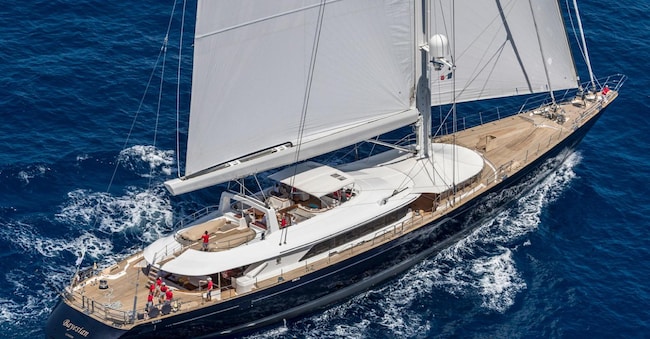
.The Bayesian, designed as a single-masted sloop boat, was one of the tallest ever created in aluminium. Built by Perini Navi, it proved to be an engineering challenge with few precedents, but the end result was a strong, well-controlled structure capable of operating within the limits of the design. Nevertheless, Edwards argues that its unique structure may have required special care when navigating in difficult conditions. At the time of the sinking, the Bayesian had been hit by a violent waterspout.
The importance of ballast
.A crucial aspect of the ship was its ballast, consisting of 30 tonnes of lead in the keel bulb, designed to counteract the wind-induced heeling forces on the sails. The moving ballast, located under the keel, was crucial to maintaining the ship's lateral stability. Edwards points out that the correct distribution and management of ballast was essential to ensure safety during navigation, especially in rough sea conditions.
Stability and angle of downflooding
.Another key element in the Bayesian's design was its "Stability Information Book", a document that provided crucial information about the ship's operational limits, including the downflooding angle. The angle represents the critical point at which water can begin to enter the ship, putting its stability at risk. According to Edwards, in the event of heeling beyond this angle, the risk of flooding becomes imminent and difficult to control.
Factors that contributed to the sinking
.For the former captain of the Bayesian, the sinking of the ship could have been caused by a combination of factors. Extreme weather conditions, coupled with a downflooding angle reached or exceeded, may have made it impossible for the crew to react in time. In addition, the absence of portholes or openings below the waterline may have contributed to further limiting the crew's ability to respond during the emergency.

