
Bbva and UniCredit, different twins: the takeover bid on Sabadell also under government scrutiny
Bbva's bid for Sabadell has many similarities with UniCredit's bid for BancoBpm: after Antitrust findings, now Spanish government spotlight

4' min read
4' min read
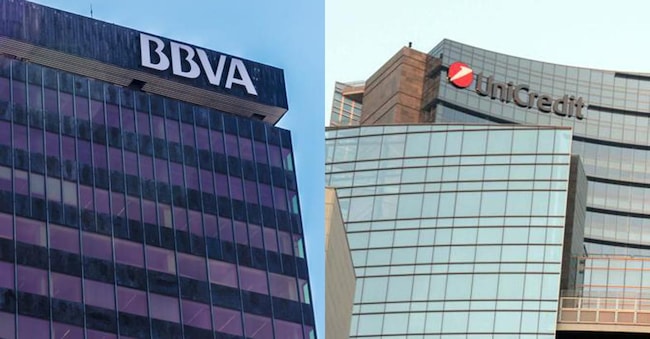
The takeover bid launched in Spain by Bbva on Banco Sabadell, a transaction 'twin' in many respects to the Italian one by UniCredit on BancoBpm, is about to cross the hard peak of the Madrid government's Golden Power. And it won't be a walk in the park, if the Iberian executive keeps faith even in the formal decision with the bombastic declarations of clear opposition to the operation made so far.
The launch of the takeover bid by Bbva, a Spanish banking giant with a market cap of around EUR 72 billion, on the smaller Banco Sabadell (EUR 14 billion) was almost a year ago. The authorisation process at European level was swift. But not that of the Spanish Antitrust Authority, which took the time to extend its examination of the deal to Phase 2. This phase requires a more in-depth examination of the deal for internal competition purposes, but is also the necessary step for the Spanish government to have the final say on the go-ahead for the transaction.
In the event of a thorough screening by the Antitrust Authority, in fact, an Iberian law (approved at the time of the centre-right executive led by Mariano Rajoy) delegates to the Moncloa the power to approve the merger between two banks. The government cannot block the acquisition, but it can prevent - in the name of national strategic interest - the aggregation between the two entities. A possible rejection of the merger or the introduction of conditionalities could make Bbva withdraw from the acquisition since, without a merger, most of the hypothesised synergies would be lost, making the deal less economically advantageous. The final meeting of the Antitrust Commission was convened for yesterday but was suspended in the course of proceedings due to the electricity blackout that affected the entire country. Already tomorrow the Authority is expected to meet again to give its conditional go-ahead.
After the conditional OK from the Iberian Antitrust Authority, the procedure is that the dossier is sent to the Ministry of Economy, which will have 15 days to decide whether to transfer the matter to the Council of Ministers. If this happens, the government will have one month to decide whether to approve, reject or condition the merger project. If the procedure takes the maximum time available, Moncloa's decision could therefore come in mid-June.
The opposition of the Spanish and Italian governments is not the only common element in the two hostile Ops that seem to be travelling on parallel tracks and are, in many ways, twins.


