Characters

Psychoanalytic interviews: fashion on Bella Freud's couch

In her popular podcast Fashion Neurosis, Sigmund Freud's great-granddaughter lets fashion designers, singers and actors talk. Here she explains how her obsession with fashion and the body came about.

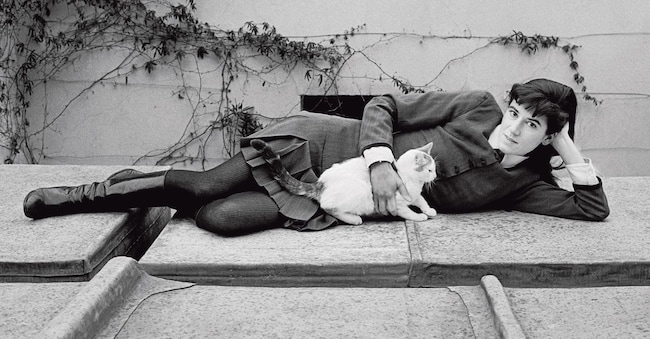
by Bella Freud

Bella Freud fotografata da Emily Andersen nel 1990.

7' min read

Translated by AI
Versione italiana

7' min read

Translated by AI
Versione italiana

The first item of clothing I was obsessed with was a pink checked shirt. It was worn by a little girl I met at a summer camp. I remember it as a very Spartan holiday, the dormitory had iron bunk beds and grey blankets, but we had so much fun singing Gary Glitter songs while sitting on the window sill in the dining hall. We were both about eight years old and the shirt represented the glamour of normality. I realised how good I felt when I wore it, and I have never forgotten how different I perceived myself. That moment eclipsed the traces of any birthdays or other significant events of my childhood.
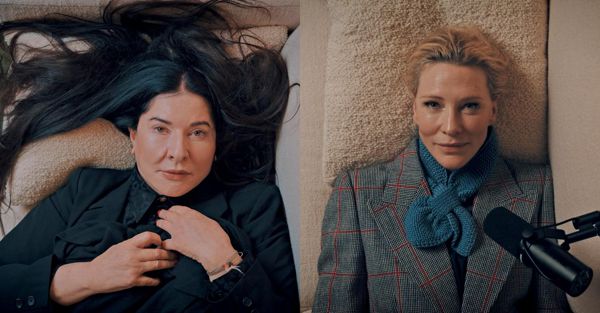
Marina Abramović, Cate Blanchett.

This was the decisive memory and genesis of my podcast Fashion Neurosis. I was always aware of the power I had to transform myself through clothes, and I had the impression that people were much more interested in fashion than they admitted or realised. In the podcast I use clothes as a kind of prism through which to formulate questions about how others perceive themselves. In my conversations the important thing - with whichever person I am talking to - is their impulse to go beyond the mirror, regardless of the field they work in, and the search for an idea beyond whether it works or not.

Loading...

It was the 1970s and I was about 11 years old when I started to notice the way other people dressed and how they reacted. I attended a Steinerian school and, although we did not have a uniform, there were few who came to class dressed fashionably. The teachers wore long brown corduroy skirts and Birkenstocks. Most of the pupils dressed indefinitely, apart from two girls who stood out. One was called Jane and she was really beautiful: lithe, with pale skin as soft as a butterfly's wings. She had blue eyes that reflected her attitude of attempted rebellion and a head of coppery red hair with fringes that reached her eyes. I remember seeing her in the schoolyard, she was about 15 years old, with a group of classmates. She was wearing a tight long-sleeved T-shirt and tight trousers that clearly showed the sign of underwear. I was almost embarrassed by her lack of modesty, until another girl said: 'Now that's what I call a good physique'. I was stunned, then realised that she was right: all this visibility of hers was so spontaneous and so attractive.

Rosalía, Nick Cave.

In our house, being five girls, there was no celebration or excitement about our growing bodies. Puberty and all that it entailed were unmentionable topics. There were jokes about breasts - about other people's breasts. Breasts were vulgar, yet they were something desirable. In our house, wearing trousers so tight that one could see the mark of underwear was so out of the question as to be considered obnoxious. And then there was Jane, flaunting all her troubled teenage beauty. A light bulb went on in me: I understood the meaning of freedom.

The other girl was called Rusty and came from the Chiswick district of London. She was different from the rest of us. We looked like unformed little girls compared to her. She looked like she knew everything, but at the same time sported a certain air of innocence and was dressed differently, fashionably.
Fashion was a forbidden word in my school. Steinerian schools follow so-called anthroposophy.

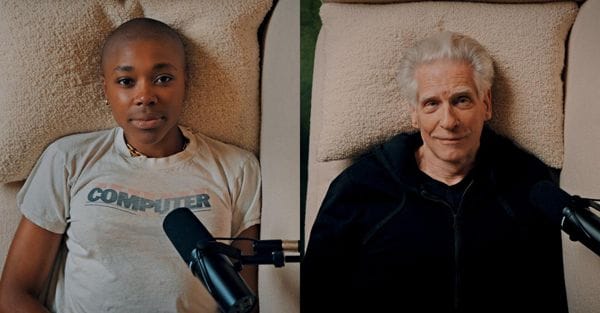
Rachel Jones e David Cronenberg, tutti stesi sul divano di Fashion Neurosis.

It is an educational, therapeutic and creative system devised by Rudolf Steiner, which seeks to use mainly natural means to optimise physical and mental health and well-being in general. Some aspects are quite interesting: it is cultivated biodynamically by following the phases of the moon; there is a belief in the ethical treatment of animals on farms, and I liked that. But, for some reason, there was a certain prejudice against fashion and they treated anyone who was interested in clothes, in appearance, as superficial and vain. Even mentioning the word fashion provoked outrage.

That's why my attraction to clothes was tainted by a feeling of shame, so I kept it hidden. I preferred to have a somewhat androgynous style, and that was fine with me: it served as a veil behind which I could secretly explore my identity. Rusty didn't have all these complexes, she didn't treat fashionable clothes as a form of narcissistic self-indulgence. Her mother gave her second-hand clothes that came from the historic London boutique Biba, she even had a pair of platform shoes that the entire Steiner community disapproved of. She introduced me to David Bowie and Marc Bolan. It was a revelation for me. I realised that I had been living in the cult of gloom! I began to discover that clothes could be a key to get out of the trap of negative thinking about myself. Why were we so ashamed of our bodies? This is one of the topics I often talk about with my sister during our long phone calls. I had so many insecurities about my physique and felt paralysed by self-criticism and an instinct of mortification. When someone in my house wore something even vaguely sexy, they immediately felt wrong. Once I went to a psychotherapist who, after listening to me for a while, asked me if I had many clothes in my wardrobe. "Not many," I hesitated. "But why not?" she countered. "This is your asset - clothes. You're good at that. And they make you feel better. So why deprive yourself of this source of security and comfort?"

Psychotherapists rarely talk about fashion, yet clothes are important signals and, in some way, represent milestones in our childhood development. That psychotherapist was quite useless, except for this one enlightenment. I began to realise just then the value of choosing an outfit. After all, the right outfit can remove one from embarrassment and sometimes even self-loathing: it helps, for instance, to deal with shyness, because it serves to convey an idea of oneself that may be impossible to articulate in words. Fashion is a parallel language.

It is a conversation that I continue to follow and carry on in my podcast Fashion Neurosis. What has amazed and delighted me is the way people converse with me. It is a relief to talk about themselves out loud, touching on topics that are often quite personal and revealing. In a way, it is the very antithesis of shame, of withdrawing and setting oneself aside.

I also found myself talking about things I had no intention of saying at all. With Nick Cave, for example, chatting about creativity and my father (German-born British naturalised painter Lucian Freud, grandson of Sigmund Freud, ndr) saying that art came before everything else - including family. I told Nick it had been hard to hear that statement, but instead of sadness, another feeling prevailed. I remembered how close I was to my father: even though he had said something like that, he didn't act on it, not always at least.

I like to ask what are the reasons that make one not want to be in a relationship with certain people. I listened to singer Rosalía's answer: she told me how she hated it when a man showed his feet. Her dark eyes and beautiful, intelligent face suddenly took on a stern look as she recalled this transgression. I love listening to the details: it is so relaxing and creates a deep connection with others to know that we all have tics, idiosyncrasies, conditioned reflexes, even quite eccentric ones. When I had David Cronenberg as a guest we talked about the body horror genre for which he is famous. As I was preparing to chat with him, I realised that body horror in fashion is all about shame. I often ask people how they feel about their bodies, as it was an issue for me to deal with. The answers really surprised me. I think it happens because the atmosphere between us in the studio is unexpectedly tender and forgiving. Reviewing the crushing verdicts of the past, pronounced against our imperfections with ruthless self-criticism, mitigates their power and malice. I did not expect this and it was very moving.

Years ago I was asked to contribute to a collection called Fashion: Great Designers Talking. I blithely said to myself, 'I will write a poem'. I froze after the first verse, so I went to my father's house to seek help. We sat down and he wrote it all down. Here it is:

Half-naked, I meditate, full of sadness,

Even if the failure is only human,

I have to get rid of this

Sartorial Metamorphosis!

Depressions and fears must be

Excluded from the Fashion Industry.

You can only be loved for your shoes

Your hat - not what you say - is the news.

Diogenes knew well that clothes

They would triumph over poetry and prose

The sure way to happiness

It is not changing minds, but changing clothes.

It remains an undisputed fact

In the wardrobe hangs your brains.

TO LISTEN Bella Freud's 'Fashion Neurosis' podcast was launched a year ago and also has a YouTube version. Each week, a protagonist from fashion, film and art is invited to lie down on the analysis couch to explore the connections between fashion and identity. In the almost 60 episodes published to date, his guests have included Rick Owens, Cate Blanchett, Hanif Kureishi, Christian Louboutin, Julianne Moore and Rosalía, among others. There were two Italians, Stefano Pilati and Alessandro Michele, who in his conversation with the designer, as well as explaining the meaning of his clothes - especially the vintage T-shirt he bought when he was a teenager at a Freddie Mercury concert - tells of his intense and different relationship with a mother - very elegant - and a father - gypsy style. fashionneurosis.com

Copyright reserved ©
Loading...
Loading...

Newsletter

Notizie e approfondimenti sugli avvenimenti politici, economici e finanziari.

Iscriviti