
Why family still matters when it comes to a company’s reputation
by Alfredo De Massis and Roberta Cellini
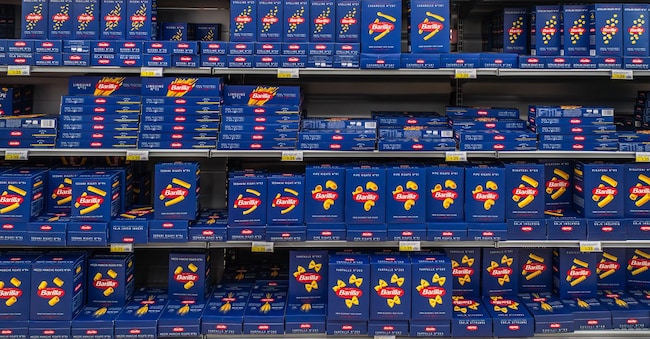
In 2026, Barilla entered the top 10 of the Global RepTrak 100 for the first time, the world’s leading ranking that measures the reputation of global companies. Rankings do more than simply assign positions: if you look beyond the figures, they help to understand which characteristics, at a specific moment in time, are actually being rewarded. And when the metric is not just performance but reputation, the picture becomes even more interesting, because it is not only brand strength that counts, but the quality of the trust a company manages to build over time.
It is in this context that the Global RepTrak 100 2026 should be viewed. More than just a simple list of companies with the highest reputational scores, the ranking highlights the factors that today make a company credible in the eyes of its stakeholders. Among the top ten are LEGO, Samsung, Ferrari, Levi Strauss and, for the first time, Barilla: companies that are vastly different in terms of sector, geography and ownership structure, but united — albeit with varying degrees of intensity and in different ways — by values, corporate culture, long-term vision and industrial traditions that are interwoven around a clear family-owned structure.
It’s not just a minor detail. In half of the top ten, in fact, the family factor remains a clearly visible component, albeit taking different forms. The most straightforward cases are those of LEGO and Barilla: the former is still owned by the founding Kirk Kristiansen family, whilst the latter is led by the Barilla brothers, representing the fourth generation, at the helm of the group. Samsung embodies the model of Korean family capitalism, whilst Ferrari now occupies a more hybrid position, though its governance retains a clear trace of family continuity in the figure of Piero Ferrari. Finally, Levi Strauss retains a family imprint that is still clearly recognisable, reflected both in its governance and in its ownership structure linked to the Haas family.
It would be inaccurate to claim that the family “creates” reputation. The family aspect does not, in itself, generate trust. Many of the companies at the top of the rankings appear to share not only strong brands or high-quality products, but also a continuity of culture and values that helps to preserve their identity and guide their long-term trajectory.
It is at this level that the discussion takes on real depth. In family businesses, reputation is not merely a competitive asset or a market indicator: it is often also a reflection of the family itself, its name, its history and its legacy. Precisely for this reason, it tends to be viewed less as a variable to be maximised and more as an asset to be safeguarded over time. And here, ownership continuity can make all the difference. This is not because the family nature of the business automatically inspires trust, but because it can place the business within a longer-term perspective, in which safeguarding the brand, a focus on quality and consistency between values and behaviour matter more than immediate returns. It is a logic that echoes one of the central themes of our studies on family businesses: reputation not merely as a competitive lever, but as a legacy to be preserved and passed on, and as a key dimension of the socio-emotional heritage of an entrepreneurial family that defines its semantic and emotional character. There is, of course, also the other side of the coin. The family can be a factor of stability, but it is not always so. It can strengthen the company’s identity and consolidate its credibility, but it can also slow it down and make it less ready to change. This is why the point is not ownership in itself, but the way in which it is interpreted and managed.

