
Because de facto Italians must also become de jure Italians
In a context often dominated by fears and simplifications, it is essential to bring real people back to the centre of the discourse: more than one million children and young people born or raised in Italy are not Italian citizens

2' min read
2' min read
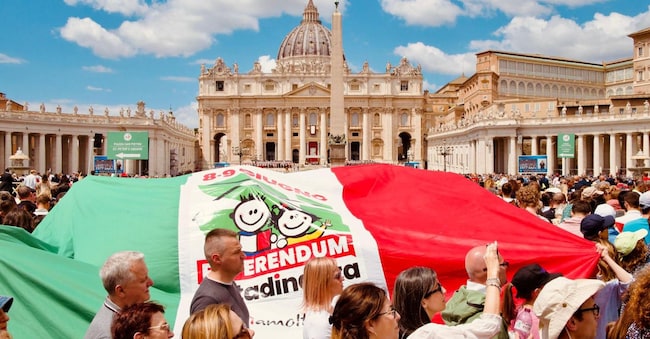
In the Italian public debate, there is finally talk of citizenship again, thanks to the upcoming referendum that could redefine who has the right to be recognised as an Italian citizen. It is good to know that this choice closely concerns children and adolescents, and that the outcome of the referendum will (also) influence their future. In a context often dominated by fears and simplifications, it is crucial to bring back to the centre of the discourse the real people who live with the consequences of outdated and unjust laws. These include more than one million children and young people who were born or grew up in Italy, but who are not citizens.
These are children who attend Italian schools, speak Italian as their first language, cheer for the national team and grow up sharing the same experiences as their peers. Yet, they do not have the same rights. They cannot fully participate in the social, sporting or cultural life of our country. And, when they come of age, they are suddenly faced with enormous bureaucratic obstacles, which risk precluding them from access to study, work and mobility.
Denying citizenship to those who are an integral part of the Italian social fabric means perpetuating a profound and unjustified inequality. It means telling these children that although they are 'de facto Italians', they are not 'by right'. It is a wound that opens in childhood and can condition their entire life path. A wound that affects not only them, but our entire society, because it undermines the foundations of cohesion and the sense of collective belonging.
As Save the Children, we work alongside these children and their families every day. We know their stories, their difficulties, their dreams. We know how the legal recognition of their identity is fundamental not only for their growth, but to build a more inclusive, richer, stronger society. A society that values its diversity instead of fearing it.
We cannot continue to leave these young people on the sidelines, ignoring their contribution and their reality.

