
Bees as indicators of environmental pollution in Italian cities
This is the Apincittà project promoted, financed and co-ordinated by the Carabinieri forestry police and involving researchers from Ispra, Iss, Crea and Izslt Federazione Apistica Italiani

2' min read
2' min read
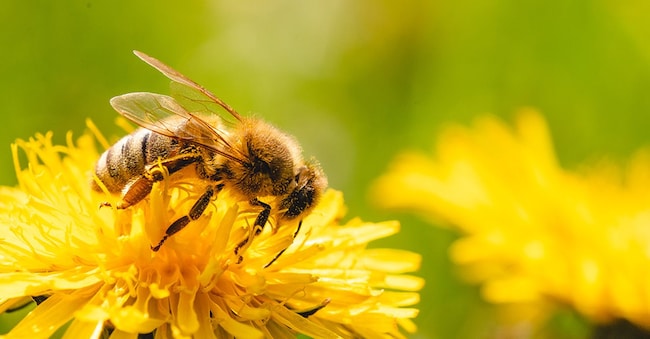
Not only control units, sensors and electronic devices, bees also participate in environmental monitoring. And this is precisely the aim of the biomonitoring project called Apincittà, which uses the Apis mellifera (domestic honey bee) as an environmental indicator underway in 60 Italian cities. From Alessandria to Rome, from La Spezia to Grosseto, continuing with Bari, Potenza and other centres in Italy.
Initiative promoted in 60 locations
The initiative, promoted, financed and coordinated by the Comando Unità Forestali, Ambientali e Agroalimentari Carabinieri (Forest, Environmental and Agri-food Carabinieri Unit Command), sees the presence of researchers from Ispra (which this month ends its collaboration in the project), other national institutions (Istituto Superiore di Sanità, Crea and Izslt and the Federazione Apistica Italiani association), revolves around the installation of 2 apiaries per location, distributed throughout the country and located mainly in the headquarters and facilities of the Carabinieri forestry officers.
The Ispra researcher
"The initiative started in recent years because the carabinieri foresters set up a project to assess the situation on a national level," says Roberto Sannino, Ispra researcher and project manager for the part under his responsibility, "because bees are an excellent detector by nature and can therefore provide a range of information on the state of places and the environment. Ispra's main contribution "is aimed at interpreting the quality of the environment and determining the level of coverage of species of nectariferous and or polleniferous interest in the territories surrounding the project apiaries".
Three selected factors
.With respect to the quality of the environment, three environmental pressure factors were selected that are significant for pollinators: these are the level of pesticide concentration in surface and groundwater, the air pollutants considered most harmful to ecosystems, and land consumption, referring to the reduction of natural areas capable of ensuring ecosystem services. The area covered by the Ispra researchers' study is the area surrounding the apiaries. In this activity, the role of bees brings, as the researcher points out, "added value". "Ispra, through its instruments and systems, carries out constant environmental analyses," says Sannino. "The presence of bees, in this context, provides a dynamic element capable of giving added value to the entire study, precisely because of the bees' ability to move around.
Looking for metals or fine dust
.Analyses carried out after the sampling in the apiaries will determine the presence and possible concentration of heavy metals, fine dust, microplastics and more. "At the European level, bees are gaining value for monitoring activities," the researcher adds. The results from monitoring bee activity can only correspond to other analyses. Let's say that if there is pollution, the bees report it. Then the comparison of the data will give a more complete picture'. The project continues until 2026 when the research and analysis will be completed.

