
Behind the Artemis mission, the battle between Musk and Bezos

Artemis II, the mission that is to bring astronauts back to orbit the Moon, has reached the launch pad. A series of tests are now scheduled to certify its suitability for launch. Should all go well, the earliest date will be 6 February. Actually, the date is not yet set. Jared Isaacman, freshly appointed to the post of NASA administrator, said that the decision will be made when the test results are in. Better not be in too much of a hurry, the launch windows are repeated every four weeks, following the lunar month, and Artemis II absolutely must go well because NASA cannot afford any hiccups if it wants to get its astronauts to the Moon before the Chinese. Isaacman himself, who at first seemed more oriented towards missions to Mars, is now perfectly aligned with the demands of President Trump who, on 18 December 2025, signed an executive order with the unequivocal title: Ensuring American space superiority. A document dictating the timetable for the return to the Moon, which must take place by 2028. A date that cannot be postponed because, in addition to being the last year of Trump's presidency, it would ensure victory in the race with China, which has set 2030 as the date for the moon landing of its taikonauts. Of course it is not usual for the timing of a space programme to be imposed by an executive order, but in Trump's America everything is unusual. While, on the one hand, the president is asking Nasa for a significant effort, on the other hand, the work of the defunct office for streamlining the administration (the infamous - and useless - Doge) has prompted 20 per cent of employees to resign, leaving quite a few key areas unaddressed. For good measure, then, the budget proposed by the president in May for NASA included a 24% funding cut, largely achieved by cancelling science. Fortunately, the congressional committee announced on 5 January that an agreement had been reached to keep spending at very close to current levels.
At NASA, the science missions, which had been severely cut back, would be down by just 1.1 per cent. The only cancellation approved by the committee relates to the Mars Sample Return mission that was supposed to bring back to Earth the samples collected and encapsulated by the Perseverance rover. It seems that the samples will have to be very patient because the mission will not happen since its supposed cost has exceeded the budget by 13 billion.
Not that the Artemis programme is particularly cheap. Each flight of the Sls (Space Launch System) launcher with the Orion capsule costs around $4.2 billion. A figure made even more abnormal by the fact that it is a 'disposable' launcher where nothing is recovered for future use. The idea of recycling the Orion capsule once back on earth has been shelved and Nasa has already given Lockheed Martin contracts for several more Orion capsules. This very high level of expenditure has already been pointed out by Nasa's Inspector General, who pointed out that there are cheaper ways to reach space. The reference to SpaceX is obvious since Elon Musk's company has managed to lower its prices for access to space. A reduction that is based on a business management model that is profoundly different from that applied by the historical industries in the sector, which first mocked SpaceX's approach, and now cannot keep up (and prices). It is a story of innovation that has repeatedly come close to catastrophe, often saving itself by the skin of its teeth thanks to the dedication of teams of engineers willing to work backbreaking shifts under the pressure of an Elon Musk who always asks all his employees to work harder and faster. 3A story well told in the book The SpaceX Revolution by Eric Berger (Apogeo), which shows how, in the space of a few years, SpaceX went from being a space start-up to a market-dominating industry. In 2025, its Falcon 9 was launched 165 times, providing more than half of the 330 launches worldwide and more than 90 per cent of US launches. The launches are mostly for cargo in circum-terrestrial orbits, but on the SpaceX website you can find information on the cost of transporting material to the Moon and Mars: $100 million to carry a tonne of cargo no matter where. This is a low figure by space standards and will become a reality thanks to Starship, a totally reusable launcher designed precisely to lower transport costs with a view to the colonisation of the Moon and Mars.
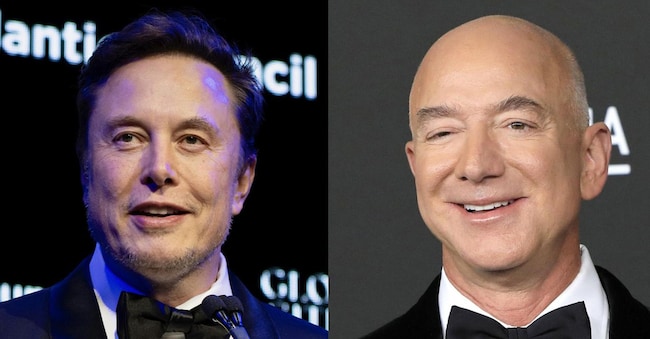
Too bad Starship is not yet operational and, inevitably, its delays affect the Artemis programme which needs Starship as its lunar landing module. To avert the danger of an ignominious overtaking, NASA asked for alternative proposals in October. A move that betrays nervousness. Elon Musk, who has a contract for the lunar landing module, has pointed out that SpaceX is ahead of everyone. However, both Space X and Blue Origin have sent proposals for simplified lunar landing programmes, turning Nasa's race to the Moon into a battleground between Elon Musk and Jeff Bezos. The two space billionaires detest each other and this will not make life any easier for Jared Isaacman who will certainly be criticised whatever his choice.

