
Behind the scenes in F1: a Grand Prix story, made possible by AWS
Every Formula 1 car has between 200 and 300 sensors that collect more than a million data points per second. Much of this data is collected and processed by Amazon Web Services and presented to the public via F1 Insights, with the aim of supporting Formula 1 in its global growth. We discuss the partnership between Formula 1 and the cloud computing giant with Adrian De Luca, Director of Cloud Acceleration at AWS.

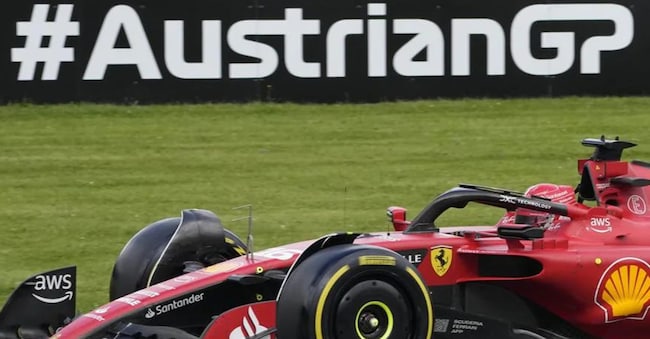
Ever since the takeover in 2016, Liberty Media has charted a clear course: to transform Formula 1 into a truly global sport, reaching new audiences and new generations. It was precisely to accelerate this transition that the partnership with Amazon Web Services was launched in 2018. Thanks in part to AWS’s infrastructure, the face of motorsport has changed: today, 42 per cent of viewers are women – an all-time high in the world of sport – and 43 per cent are under 35. These figures are bringing us ever closer to the ultimate goal: reaching one billion fans by 2027.
Having a diverse audience presents a challenge for sports management: making Grand Prix races appealing to everyone is becoming increasingly complex. Indeed, fans have very different preferences when it comes to how they follow the race, with a divide between the more traditional audience, who prefer to watch the entire Grand Prix live on television, and the under-35s, who prefer to watch shorter clips of the race focusing on their favourite drivers: ‘In Formula 1 we have Louis Vuitton and many fashion brands , so there are fans who get excited about what the drivers or sponsors are wearing… There are even fans who don’t watch the race at all!”, reveals Adrian De Luca, Director of Cloud Acceleration at AWS.
This therefore turns the traditional perspective on its head: it is not the fans who follow the sport, but the sport itself that, in a sense, chases after the fans. This is achieved, for example, by focusing on circuits in countries with promising growth prospects, changing the rules to maintain competitive balance, or by improving the viewing experience of races, ‘democratising’ access to a sport that, in terms of its technical complexity, is usually the preserve of a select few. In this regard, F1 TV was created which, amongst its various features, allows viewers to watch targeted highlights and increases the focus on creating content for social media: “AWS not only supports the transmission of images but also how fans interact via F1 TV or the website”.
The narrative challenge of a Grand Prix and the opportunity identified by AWS
The main challenge in covering everything that happens on the track during a race weekend is that the action is spread over several kilometres, with battles taking place simultaneously at different points around the circuit. “When you look at motorsport, compared to a ball sport – such as football or basketball – the situation is very different. In a ball sport, for a broadcaster, the way the narrative is built is by following the ball. Formula 1 and motorsport are much more complex,” explains De Luca. “First of all, the race track is several kilometres long and there are 22 cars all racing on a very wide circuit. Unlike a ball sport, where the competition takes place in a single spot, in Formula 1 the competition unfolds in several places at the same time. There may be a battle between the first and second drivers, but at the same time something interesting may be happening between the sixth and seventh, or even further back.”
At an operational level, all of this is carried out with the understanding that the data must be transformed into a live television commentary that is accessible to all the different viewers of the Grand Prix.


