
Beijing is banking on the ‘Ice Silk Road’: the Arctic is the new shortcut between Asia and Europe
China launches its first regular container shipping service through the Arctic, linking Ningbo to the United Kingdom via the Northern Sea Route

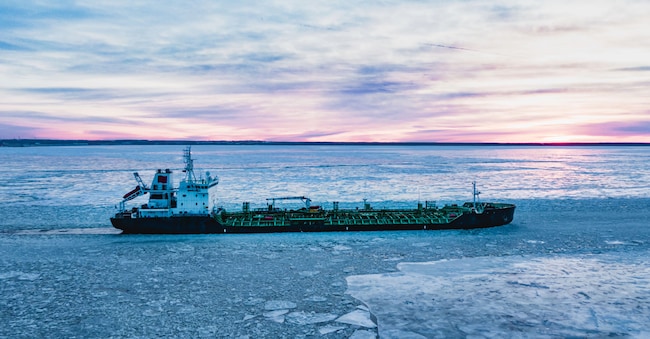
China is attempting to reshape the geography of global trade by travelling over the roof of the world. This week, the Chinese shipping company Sea Legend will launch the first regular container shipping service through the Arctic, linking Ningbo – one of the main ports on China’s east coast – to Felixstowe in the United Kingdom. The company has named this route the “Ice Silk Road”, the ‘Ice Silk Road’, symbolically evoking the ancient trade links between East and West.
The change is not merely commercial. The project reflects a broader transformation that also encompasses climate and geopolitics. The melting of the polar ice caps is, in fact, making the North-East Passage – along Russia’s northern coastline – increasingly accessible, opening up an alternative to the traditional sea routes through the Suez Canal and the Red Sea. The journey between China and Europe could be reduced from around 40 days to just over 20, resulting in significant savings on operating costs and fuel.
Shipping companies’ interest in the Arctic route has grown rapidly in recent years. In the summer of 2025, a record 23 transits were recorded along the Northern Sea Route, compared with 15 in 2024. During the summer months, the sea ice retreats sufficiently to allow passage even for ships without specialised ice-breaking capabilities.
It is not just economic factors that are driving shipowners. The growing instability along some of the main bottlenecks in global trade is making the Arctic an increasingly attractive option. In particular, tensions in the Red Sea and the Bab el-Mandeb Strait, where the Iran-backed Houthis have renewed their threats against commercial shipping, have brought the vulnerability of traditional routes back into the spotlight.
However, the prospect of a new trade route passes through a highly sensitive area. The Northern Sea Route is controlled by Russia through an agency administered by Rosatom, the state-owned nuclear energy giant, which issues navigation permits for the 28 sections into which the route is divided.

