WHO, Lebanese hospitals at risk of running out of medical supplies
Israeli Defence Minister Katz: Hezbollah seeks ceasefire

Key points
Israeli Defence Minister Israel Katz said that Hezbollah is seeking a ceasefire and stated that Israeli raids have killed more than 200 militants in Lebanon in the last 24 hours, bringing the total to over 1,400 since the clashes began. Katz said Israel is ready to respond forcefully if Iran launches attacks and continues to strike targets throughout Lebanon, including the Litani area.
Oms, hospitals at risk of running out of essential medical supplies
Some hospitals in Lebanon may run out of essential medical supplies within a few days due to the exponential increase in the number of injured caused by the recent Israeli raids. This was reported by the World Health Organisation (WHO), quoted by Haaretz, pointing out that supplies are rapidly dwindling after the numerous casualties recorded in the last day. "Some trauma management materials are already in short supply and we may run out of them in a few days," said the WHO representative in Lebanon, Abdinasir Abubaka. Life-saving trauma treatment kits include bandages, antibiotics and anaesthetics needed to treat the war wounded, the WHO explained.
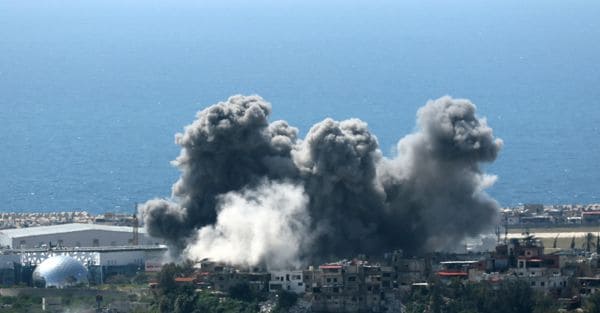
The death toll, meanwhile, grows more dramatic with each passing day. In the last few hours, atat least 17 people were killed and several others wounded in Israeli air raids on southern Lebanon. This was written by the Lebanese news agency NNA. An Israeli attack on the town of Zrariyeh in southern Lebanon killed more than ten people, including women and children, after hitting a residential building. Another Israeli air raid in Abbassiyeh killed at least seven people and injured others, with figures still preliminary. The Health Ministry said the death toll from Israeli attacks on Lebanon since 2 March had risen to 1,739.
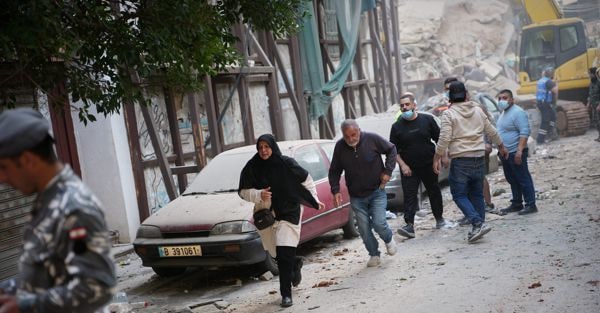
Israeli armed forces claimed to have hit a Hezbollah commander in Beirut, after Lebanese state media reported that Israel had targeted a residential neighbourhood in the capital. "Earlier, the IDF hit a Hezbollah commander in Beirut," the military said, without identifying the target. Footage published by Lebanese media showed that a building in the Tallet Khayat neighbourhood, outside the Hezbollah stronghold in Dahiya, partially collapsed as a result of the attack.
Explosions and missile launches over the Lebanese capital
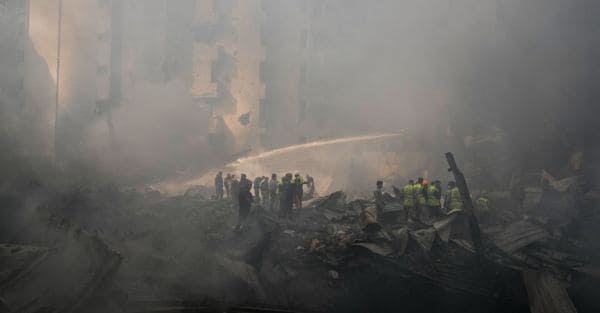
A massive wave of Israeli missiles hit Beirut in the space of a few minutes, simultaneously striking several neighbourhoods of the Lebanese capital, from the centre to the waterfront to the southern suburbs. This was reported by local sources and eyewitnesses. The explosions affected densely populated areas, causing panic among residents. Several testimonies speak of 'apocalyptic scenes', with buildings damaged or destroyed and columns of smoke visible in several parts of the city. Medical sources report numerous cadavers in the streets and a high number of injured people, with hospitals under pressure.
The same sources issued an urgent appeal to the population to donate blood. Rescue operations are underway in several affected areas, with ambulances and emergency teams busy reaching the bombed sites in an environment made difficult by the simultaneous attacks and damage to infrastructure.