
Benevento and India to train and recruit labour force
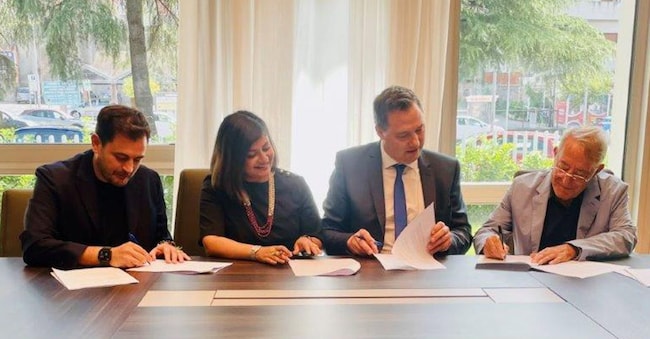
The initiative of the Sanniti builders' association (ANCE), which signed the agreement with the companies Magic Billion (Indian) and IndiaWorks Gmbh (German)

2' min read
2' min read
An agreement was signed in Benevento that, for the first time, concretely implements the Migration and Mobility Agreement signed on 2 November 2023 between the Italian and Indian governments. It was promoted by ANCE Benevento and Confindustria Benevento, together with international partners Magic Billion (India) and IndiaWorks GmbH (Germany): the aim of the initiative is to provide answers to the demand for labour that is unanswered in Italy. How? The idea is to train young skilled Indian workers in India and then place them in Italy in the construction, mechanics, energy and plant engineering sectors.
The agreement - the first of its kind at national level - was created as a concrete response to the structural labour shortage that is slowing down construction sites, strategic works and investments throughout the country: according to Unioncamere-Anpal data, more than 500,000 job positions remain unfilled each year due to a lack of suitable profiles.
'We have chosen to act,' says Flavian Basile, president of ANCE Benevento, 'not to replace Italian labour, but to enable companies to continue to grow, create development and generate more jobs for our young people as well. This ethical, legal and transparent model can represent a national best practice'.
The project envisages Magic Billion selecting profiles in India that are compatible with the needs of Italian companies, organising a certified pre-departure training course that includes lessons in the Italian language, occupational safety regulations, other technical-operational skills, basic elements of the CCNL in construction, and Italian labour culture.
At the end of the course, the candidates will arrive in Italy with a contract already signed, and will be accompanied for at least six months with tutoring and support from Formedil and the host companies. 'It is a challenge that has work, legality and quality at its centre,' Basile continues. A project that is not commercial, but institutional, based on responsibility and dialogue between territories and countries'.


