
Bergamo best province in Italy thanks to tourism, innovation and healthcare excellence
The Lombardy city has become attractive for tourism, innovation and care. Now it focuses on brownfield redevelopment and sustainable mobility
4' min read
4' min read
Bergamo unexpected. Bergamo shows a new face, which goes beyond the narrative of a city focused only on industry and manufacturing, almost a satellite of Milan. Environment, services, culture, sport and health are the new cards that in recent years have changed the perception and life in what, despite the general difficult moment, remains one of the most developed areas in the country. When, during the Covid epidemic, some wondered whether we would come out of it better, many had given up all hope only a few months after the disaster. In fact, here today, amidst the scars, a positive legacy remains.
Mayor Elena Carnevali, who succeeded Giorgio Gori in June, is also convinced of this. 'In this city, we have all learnt to move forward together, there is a deep identity dimension that allows for mutual recognition of the role. Administration, Chamber of Commerce, industrialists, associations and the Church all row in the same direction and this is decisive in the end'.
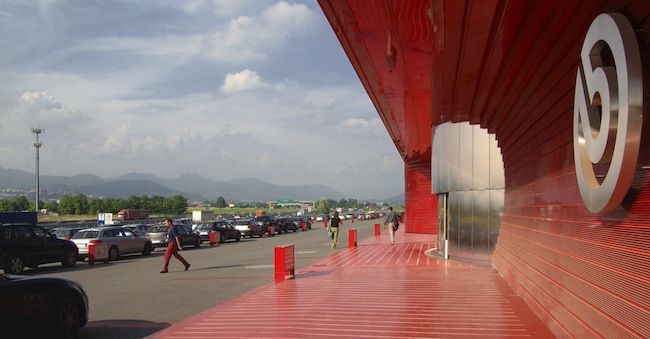
There has also been the courage to bring out a new vision which is that of an 'open city on a European scale based on a pragmatic dynamism rooted in innovation on the one hand and solidarism on the other'. In this sense, the symbolic places of change are undoubtedly the airport, the university (with Mechatronics, Engineering and the Legal Pole), the Red Kilometre and the hospital system, both public and private. With an eye on what will be the new trade fair, in anticipation of its doubling.
But Carnevali is particularly keen on the general land use plan that supports 'a development of the urban area without consuming more land'. Certainly an important goal given the pressure that so many areas are under, especially near major arteries. "This has made it possible to focus on the recovery of large disused areas to which we have tried to give a new vocation, including a cultural and exhibition role. Now we are thinking in terms of a metropolitan city that grows on new poles. But a transport network is needed to reduce car use. Hence, the Valli tramway, the Porta Sud intermodal centre and the new rail link to Orio al Serio airport'.
For Giovanna Ricuperati, president of Confindustria Bergamo, it is also a priority to emphasise how the city can be defined as 'a true relational capital that finds its strength in the sense of community'. This is especially so at a time like the present, when the economic situation is certainly not favourable. 'Our way to be resilient is to be open to the world and to innovate'.

