
Berlin points the finger at Moscow: blamed for the attempted drone attack in Leipzig
On 4 August, unmanned aircraft carrying explosives were found at the airbase. Berlin closes the Russian consulate in Bonn and the Russian House in Berlin; NATO and European allies express their solidarity. Moscow: they are seeking an escalation
from our correspondent Gianluca Di Donfrancesco
 Aggiungi Il Sole 24 Ore
ai preferiti su Google
MAGDEBURG – The German Government openly holds Moscow responsible for the attempted drone attack at Leipzig Airport on 4 August. And this accusation has been followed by retaliatory measures, with the closure of the Russian consulate in Bonn and the Russian House in Berlin, the historic cultural centre that has long been at the centre of controversy and suspicion.
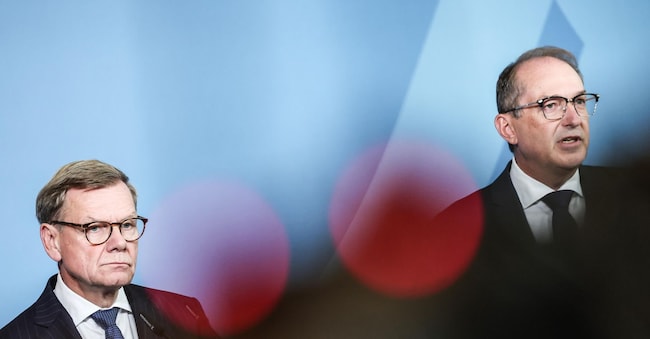
The announcement had been brewing for days: the Russian link had emerged straight away, and last week the Christian Democrat Chancellor, Friedrich Merz, promised to make the masterminds ‘pay dearly’. Yesterday afternoon, the Minister of the Interior, Alexander Dobrindt, confirmed the intelligence services’ suspicions at a press conference: following the police investigation, “the Government has come to the conclusion that Russia is responsible for the hybrid attack in Leipzig”. Standing alongside Dobrindt was the Foreign Minister, Johann Wadephul, who had returned specially from a mission to Algiers.
This is not the first time Germany has pointed the finger at Moscow, but this explicit condemnation of a serious act of aggression, however ‘hybrid’ it may be, is raising tensions to levels not seen for some time, following the endless series of violations of European airspace, provocations in the Baltic, incendiary parcels at DHL logistics centres, cyber-attacks, destabilisation campaigns and acts of sabotage against energy infrastructure. Just yesterday morning, homemade explosive devices were found at a power station in Brandenburg, near the border with Poland. They did not explode, but there was damage to the power lines, resulting in a brief power cut.
The events in Leipzig, Wadephul emphasised, ‘form part of a broader pattern of Russian hybrid operations in Europe’. And it is significant that Dobrindt, after condemning the attack, had to make it clear that ‘we are not at war’.
The incident at Leipzig-Halle Airport has sent shockwaves through Germany, even though the country has had to get used to a long series of drone sightings at its airports in recent years. Shortly before midnight on 4 August, a drone was reported near a cargo aircraft operated by the Ukrainian company Antonov. It had attached a package fitted with a detonator. But that was not all. A DHL aircraft, shortly after take-off, collided with another drone and was forced to land in Hanover. A third drone carrying explosives was then discovered. Just a few days later, Hanover Airport itself was closed due to a drone flying overhead.


