
Berman and the 'revenge' of the Neo-Romantics
At the MART in Rovereto an extensive exhibition dedicated to the artist can be visited until the first of March
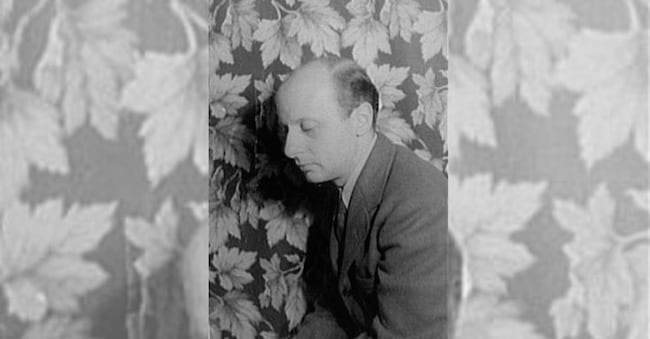
The hour of the neo-romantics is upon us: Christian Berard, Jean Cocteau's set design wizard was honoured by the Nouveau Musée National de Monaco in 2022. A magnificent exhibition curated by Patrick Mauriès at the Musée Marmottan in Paris in 2023 highlighted the fascination of this anti-avant-garde artist who had developed his own line of fantastic research in the 1920s and 1930s. At the time of the most daring formal experiments, this group (in which Eugene Berman and Pavel Čeličev stood out) wanted to remain faithful to a magical vision of the past, brought in as the only possible key to the narrative of art.
Berman's Medusa
The chosen symbolic image was a magnificent Medusa by Berman. Today, after last year's in-depth work by Monica Cardarelli at the Civita Castellana Museum, which houses the artist's works and archaeological collection, an extensive exhibition with the subtitle Modern Classic (curated by Ilaria Schiaffini, Peter Benson Miller with Denis Isaia and Sara De Angelis) is underway at MART in Rovereto, which ends on 1 March. It is the largest ever held in Italia on the Russian-born artist, who was in Rome in the last part of his life. The extensive catalogue takes stock of a bumpy existential itinerary, which is above all linked to a precise desire to resuscitate the feeling of the Baroque in the modern, with very elaborate paintings, similar in certain aspects to the art of Fabrizio Clerici, who in Italia was one of the most attentive figures to the neo-romantic world on which he intervened on several occasions, presenting Pavel Tchelitchev at the Galleria dell'Obelisco in 1950 (his pages on the subject can be found in the volume of his Scritti, recently published by Electa, edited by the author; his portraits signed by the protagonists of the movement appear in the exhibition). Berman initially had his fortune in the United States, especially in the dimensions of ballet, opera and theatre. Then, after the advent of action painting, he was marginalised along with his fellow artists. And yet, as Cecil Beaton wrote, the impact of these figures had been very important for many: in a text from his 1932 diary, from the anthology recently published by Neri Pozza with the title Molto dipendeva dal futuro, he wrote of Pavel Čeličev: "at first he intimidated me, but soon he exerted an almost hypnotic influence on me and, a victim of my spell, my photographs became neo-romantic". The exhibition at MART starts from his first production in Paris and in Italia, where the point of reference was Corot (works such as The Fountain and Hadrian's Villa in Tivoli), before his fundamental encounter with Giorgio De Chirico, which decisively changed his horizons. A metaphysical wind shakes the landscapes of Promenade en val d'Enfer (1933) and Statue mutilé (1933). Painting reacts to History by transforming the figures of derelicts in the desert into From Paris, where he had arrived after the first conflict, Berman arrived in the 1940s in New York and then in Hollywood. Here, his palette takes on the bright colours of California and is coloured with violent reds and oranges. A trip to Mexico led him to darker visions, to scenes that are realistic but pervaded with existential melancholy. Magnificent canvases date from his American period, such as the mysterious Offrande aux nuages (1940), depicting a secret ritual, or the dramatic Dido abandoned (1943), in which his favourite muse and model, his wife Ona Munson, appears, a performer whose memory is indelibly linked to her cameo as Bella Waitling in Gone with the Wind (1939), as well as to her stunning performance as Mother Gin Sling in Josef von Sternberg's hyperbaroque Shanghai gesture (1941). The actress appears in many of his paintings, until her suicide in 1955 in New York. From 1949 (first solo exhibition at the Galleria dell'Obelisco in Rome) she was in Italia for a long time, until she finally moved to the capital in 1957. Remarkable in the exhibition in Rovereto is the section dedicated to theatre, which was always very favourable territory for the neo-romantics, even when critics attacked them for being outside their contemporary currents. Among the many productions, the eighteenth-century fantasias are memorable: La serva padrona that they staged in the theatre in Asolo, reassembled at the University of Sarasota in Florida, and the perfect Così fan tutte that inaugurated the Piccola Scala in 1956, conducted by Guido Cantelli.
Eugene Berman, Modern Classic, Rovereto, MART, until 1 March

