
Bernardi: balance between innovative capacity and memory
Independent curator, promotes her country's excellence through a fruitful international dialogue with institutions

3' min read
3' min read
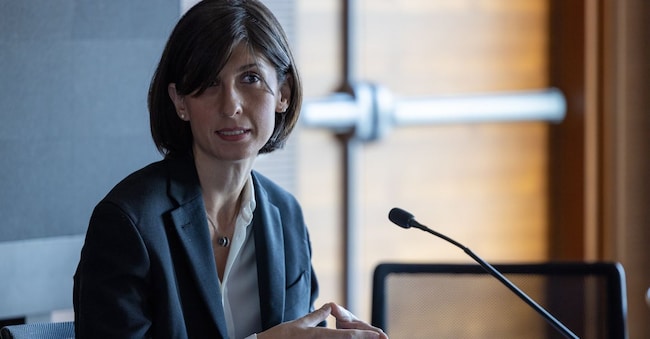
Ilaria Bernardi, (born 1985 in Pescia), specialises in Italian art from the 1960s to the present, is a PhD in art history and curator. In her exhibitions, she has often paid particular attention to the themes of intercultural exchange, the condition of women, the environment and community. She also deals with artists' archives as a whole and, in particular, in the past she was responsible for archiving and cataloguing the entire corpus of works on paper by Giulio Paolini.
Tell us about yourself, your path and your curatorial vision? Above all, which exhibitions, in terms of impact and importance, can be qualifying of your path?
I began my curatorial career at the Castello di Rivoli under the direction of Carolyn Christov-Bakargiev. I then chose to go freelance, curating exhibitions at institutions in Italy and abroad (including Gnamc, Maxxi, Palazzo delle Esposizioni in Rome; the Triennale in Milan; the UN in Geneva; the European Parliament in Brussels...) and collaborating with organisations (such as the Associazione Genesi) and key figures such as Germano Celant. I have always concentrated on Italian art from the post-war period to the present, promoting it above all internationally and analysing it with a scientific-historical approach. Among the exhibitions abroad, I would like to mention two that exemplify my approach. In 2018, in New York, I curated "Young Italians" (co-organised with Magazzino Italian Art) which investigated the directions of more recent Italian art, while in 2023, at the Wits Art Museum in Johannesburg, I curated the first exhibition dedicated to Arte Povera on the African continent.
Looking back, is there an Italian Pavilion that has particularly impressed or inspired you and what mistakes should not be repeated? And broadening your gaze to international ones?
I don't think we can speak of mistakes: every curatorial choice is useful for reflection and improvement.
Looking back, I mention, not as my inspiration but as a tribute to the curator, the 2007 Italian Pavilion curated by Ida Gianelli, an exemplary figure for me. Among the international pavilions, I mention that of Belgium in 2022 dedicated to Francis Alÿs: he showed how Art does not need to be muscular, but pure "lyrical intuition", quoting Benedetto Croce.


