
Bertha von Suttner and the northern gannet on the new 200-euro banknotes

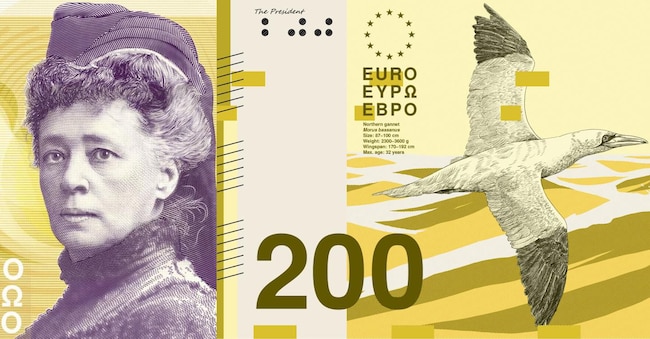
Bertha von Suttner – on the front of the banknote – or the common scoter: this is the choice between the two designs for the 200-euro banknote put to a vote by 20 of the 27 European Union countries that are members of the European Central Bank, including Italia.
Let’s see who they are.
Bertha von Suttner (Prague 1843 – Vienna 1914) was an Austrian writer and peace activist who gained international recognition for her novel *Die Waffen nieder! (“Lay Down Your Arms!”), published in 1889. This novel, translated into numerous languages, brought the pacifist movement to the attention of the public and established her as a leading figure in the struggle against war.
Her tireless efforts to promote peace, including the organisation of peace societies, participation in international peace conferences and her advocacy for disarmament, earned her – as the first woman – the Nobel Peace Prize in 1905 (Marie Curie was, in fact, the first woman ever to be awarded a Nobel Prize, in physics, in 1903).
Bertha von Suttner’s works were banned and burnt in Germany in 1933 during the infamous Nazi book burnings (Bücherverbrennungen), in particular in May of that year at the hands of the National Socialist regime, which condemned pacifism and ideas contrary to the Reich’s militarism.


