
Bessent at the G20: ‘Reining in China to restore balance to global trade’
The US Treasury Secretary has criticised Beijing’s excessive exports and is pressing the EU to introduce barriers against Chinese goods. Dombrovskis: “China should spend more, the US should spend less, and the EU should invest more.”

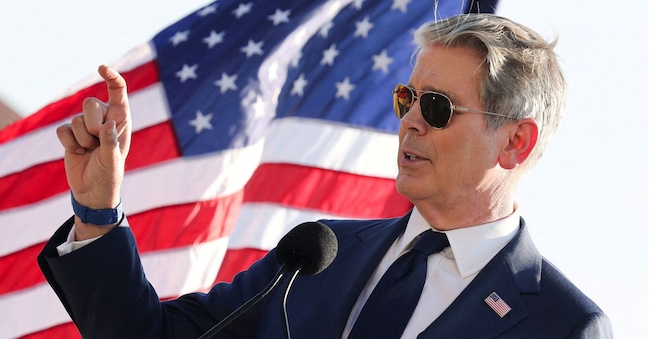
Scott Bessent points the finger at Beijing and calls on G20 leaders to curb imports from China ‘to protect jobs in domestic industries’. The US Treasury Secretary emphasised “the need to agree on ways to reduce global trade and fiscal imbalances” whilst speaking on the final day of the summit of the world’s twenty largest economies in North Carolina. Meanwhile, another wave of selling on the bond market reignited concerns over rising debt levels and fresh inflationary pressures. “Bond yields point to expectations of stable or falling inflation,” commented Bessent.
This direct attack on China over trade – which is nothing new but remains risky even for the United States – came as Donald Trump and his administration in Washington prepare to welcome Xi Jinping in three weeks’ time. According to Reuters, Bessent urged G20 governments to review their trade terms with China and to consider introducing higher trade barriers for Chinese products, in order to put pressure on Beijing to restore balance to its economy, shifting the focus and stimulus from production and exports towards domestic consumption. Faced with structurally weak domestic demand, China has redoubled its efforts to export electric vehicles, semiconductors and other goods: its total exports rose by 23.9 per cent year-on-year in July, prompting the European Union to call for stricter restrictions on sales of Chinese products.
Until yesterday evening, the United States had been attempting to reach a joint statement, if not against Beijing, then at least ‘on the need to reduce global imbalances’. However, the United States has not put forward a concrete plan to reduce its excessive budget deficits: a step which, according to economists, is essential not only for the White House’s credibility but also for reducing the annual global trade deficit, which exceeds 1,000 billion dollars.
China, a member of the G20, has shown little interest in the calls – which have been repeated for years – to reduce industrial subsidies and restructure its economy, whilst its currency, the yuan, remains significantly undervalued according to most indicators. During the G20 summit, Chinese representatives opposed any text or condemnation of so-called ‘non-market economies’.
The European Commissioner for Economic Affairs, Valdis Dombrovskis, agreed with the US perspective, arguing that ‘China is one of the main sources of global economic imbalances’, but also reiterated that it is ‘up to the US and Europe to take action’ to achieve a more balanced global economy. “To briefly summarise this analysis, which we have been conducting for a couple of years, China should spend more, the United States less, and the European Union should invest more,” said Dombrovskis. “It is important that all economic blocs take action to address these imbalances, which obviously,” he added, “increases the effectiveness of the global policy response, and this applies in particular to China as well.”


