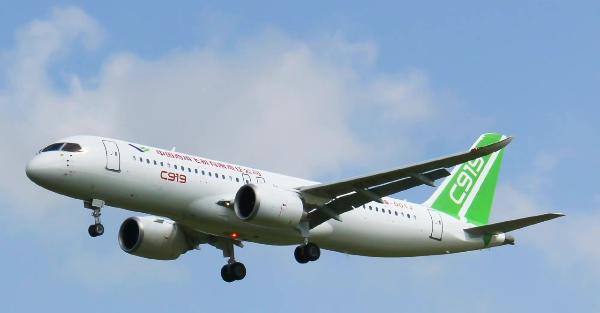
Between Airbus and Boeing comes Comac's Chinese challenge
The C919 competitor to European and American narrowbodies debuts at the Singapore show
by Mara Monti - Toulouse by reporter
4' min read
Key points
4' min read
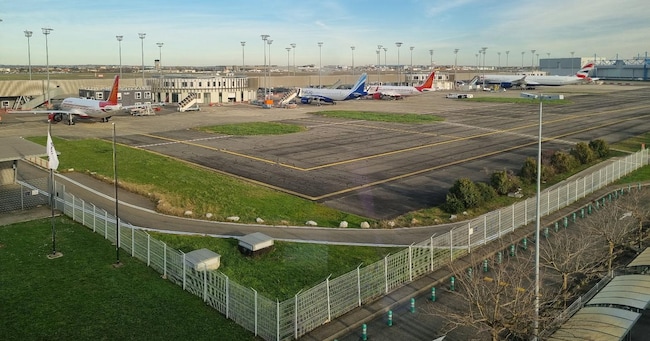
Two planes destined for Delhi and Guatemala City are on their way from Toulouse to the headquarters of their respective airlines, Air India and Avianca. They have just left the Airbus factory and are shining in the southern French sunshine, their tails decorated with the carriers' logos. While waiting for their flight, they are parked at the new aircraft delivery centre together with the other aircraft destined for IndiGo and British Airways, which are also ready for delivery.
Airbus and the new delivery centre for the long-awaited wave of deliveries
The Airbus headquarters complex near Blagnac International Airport just outside Toulouse in the south of France is testimony to how quickly the European company is growing: last summer a new assembly line was opened in Toulouse to support the development of the A321neo. And it recently cut the ribbon on the new, elegant delivery centre welcoming its customers, in time to prepare for the wave of deliveries expected in the coming years.
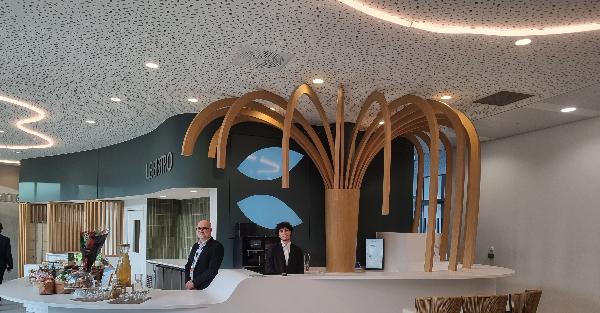
"We are delivering more planes than expected and will continue to deliver more this year," explained Jill Lawrie, head of the Airbus customer experience team, speaking from the observation deck of the new building where she can see the hangar that produced the A380 superjumbo now converted into a new production line for the A321neo.
The challenge of producing thousands of aircraft
.Airbus CEO Guillaume Faury, at the presentation of annual figures, set a delivery target for this year of 800 aircraft (735 in 2023), described as a 'good compromise' between demand still at record levels and supply chain difficulties. Of these, 610 belong to the Airbus320 family, the core business of commercial aircraft of which the manufacturer has 62% of the single-aisle aircraft market: Airbus and Boeing produce most of the world's airliners, but after the crisis of the American competitor, Toulouse is widening the gap.
The challenge is to produce the thousands of aircraft that airlines around the world have already ordered, requests for 8,598 aircraft equivalent to a 12-year production run. A race slowed only by supply chain problems that have made it harder to keep up with demand, not by air traffic, which is still estimated to grow by 5.5% this year, exceeding pre-Covid levels.