
Between bans and events, Milan's Olympic week begins
Diplomatic machine and security at work for the 50 expected heads of state

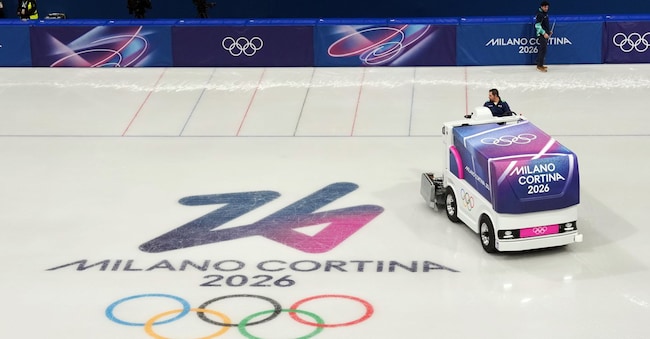
The long week leading up to and in preparation for the Winter Olympics in Milan and Cortina has just begun, with the first institutional appointments, the first city blocks, events to remember and athletes to honour. And for Milan it is an awakening, because until ten days ago it was difficult to perceive in the city streets that such an event would arrive. There have been agreements between traders and the Milano Cortina Foundation, but the IOC itself and the sponsors have a very strict policy on the use of symbols and images; schools have received 10,600 tickets at a reduced price for hockey (and 7,000 for para-hockey), but they will be closed on 6 February inside the ring road. Yesterday, however, the event got into full swing, with the first institutional moment that required Palazzo Marino to be armoured and controls to be imposed in Piazza della Scala: the arrival of the President of the Republic Sergio Mattarella in Milan City Hall, in the presence of the members of the IOC, and then at La Scala Theatre, for a concert dedicated to the opening of the Games.
In the meantime, the city has taken on 'colour' with 'fan villages', meeting places to follow the competitions via streaming; meeting places set up by the sponsors within the 'Olympic Boulevard' route; the National Olympic Committees' Houses dedicated to the meeting between fans, athletes and stakeholders; the sponsors' stores.
Security and Restrictions
Five red zones have been set up for the Winter Olympics: the Sempione Park and Arco della Pace area, where the Olympic brazier will be lit on Friday; the areas around the Ice Hockey Arena in the Santa Giulia district; the Olympic Village in Porta Romana; and the Assago forum area. These areas will be thoroughly checked. In addition, there will be changes to the road system along the route of the Olympic Flame, which will start on 5 February from the Milan hinterland, from Sesto San Giovanni to the Duomo, and will then start again in the city on 6 February. Many roads, especially parts of the ring roads, will be blocked to car traffic and some public transport stops will be banned.
Heads of State and Diplomacy
In addition to this, Thursday 5 will also be a complicated day because President Mattarella will visit the Olympic Village in the morning. In the afternoon, some 50 heads of state are expected at the Fabbrica del Vapore for an institutional dinner offered by IOC President Kirsty Coventry, who will do the honours, in the presence of Prime Minister Giorgia Meloni. Representatives of 92 countries participating in the Games have been invited, there is no definitive list yet for security reasons. In addition to the controls, diplomacy is at work here to figure out who are the 'friends' who can sit next to them, and those not on good terms that are better kept away for the success of the evening. There is great expectation for French President Emmanuel Macron, who is currently in open friction with the Americans. Vice President J.D. Vance and Secretary of State Marco Rubio are expected from overseas.
Three Ice agents from the investigation department will make their entrance in Milan - probably with further controversy. UN Secretary General Antonio Guterres is also expected to arrive, as well as Royal Albert of Monaco and those of the Netherlands. On 6 February the Olympic Flame will continue its journey in Milan, touching symbolic places such as the Castello Sforzesco, Parco Sempione, the Darsena, Brera and Porta Nuova. On the same day, Casa Italia will also be inaugurated at the Triennale; finally, the opening show will be held at San Siro, with the area obviously subject to strict controls. In the meantime, the public transport company Atm is strengthening its service, with the extension of the timetable from 5 to 22 February until 2 a.m. for the metro, the shuttles connecting Rogoredo to the Santa Giulia Arena, and with the expansion of some tram lines.


