Where is it located and what is Borgo Egnazia, the Apulian venue of the G7
During the G7 the eyes of the world are on the region, the perfect opportunity for an itinerary through its heart, through villages, olive groves and art from the Murge to the Valle d'Itria

3' min read
3' min read
The seven greats of the Earth in Apulia from Thursday 13 June for the G7 (video), together with Pope Francis and the UN secretary, will experience the same wonder that made the stupor mundi Frederick II of Swabia fall in love with the Tavoliere. The journey of discovery of this long, long land between two seas and an ocean of olive trees can only begin at Castel del Monte, which looks like a 13th-century spaceship landed with its absurd octagonal shape on the edge of the Murge.
A classic incipit, yet essential for discovering this region that, even after the tourist hangover of the pandemic summers, retains places that are just as mystical and somewhat mysterious: for example Lucera, with another Frederician fortress with a vertiginous roundabout, a Roman amphitheatre and a Gothic Angevin cathedral that invites even the most recalcitrant to the idea of organising their wedding there.
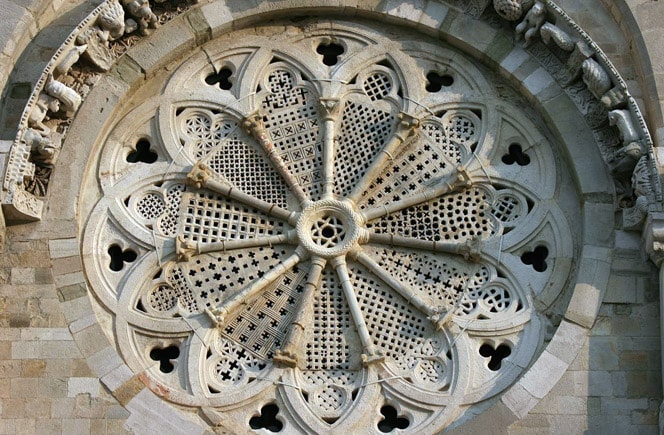
Then there is the town of Troia, which seems to challenge Puglia with the lightness and fineness of the rose window of its Cathedral of Santa Maria Assunta, which with its eleven Corinthian columns and capitals is an arabesque lace. And how else to define Oria, with its castle, which the latest edition of the Lonely Planet guide aptly describes as 'a magical place, perched on a hill that rises like a mirage from the Brindisi plain', if not with enchantment.
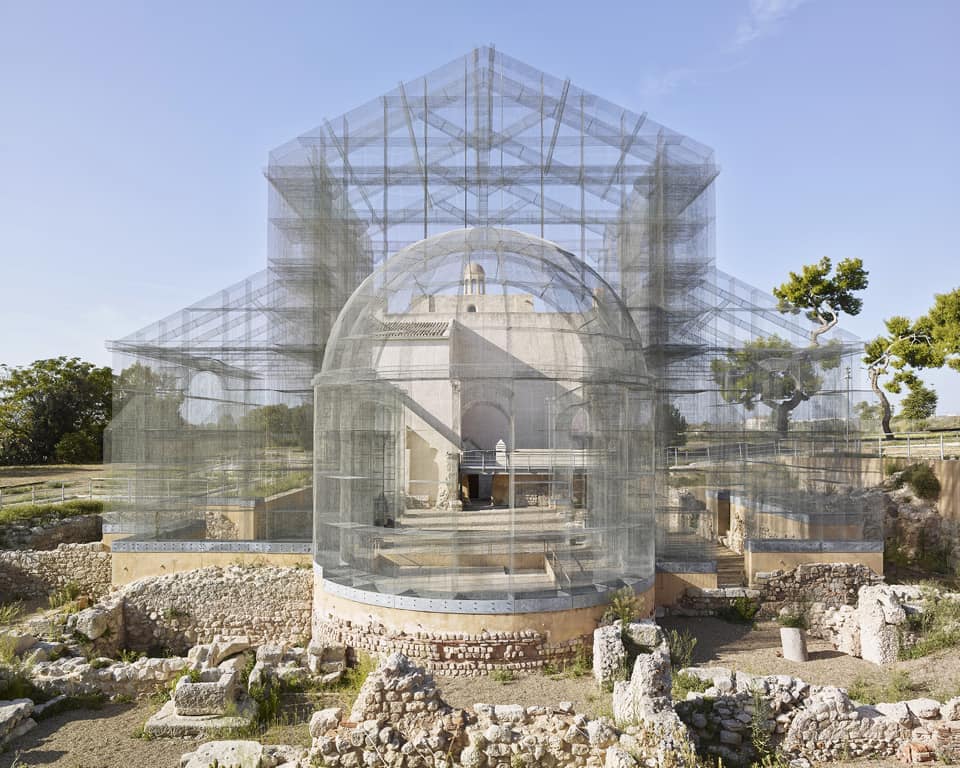
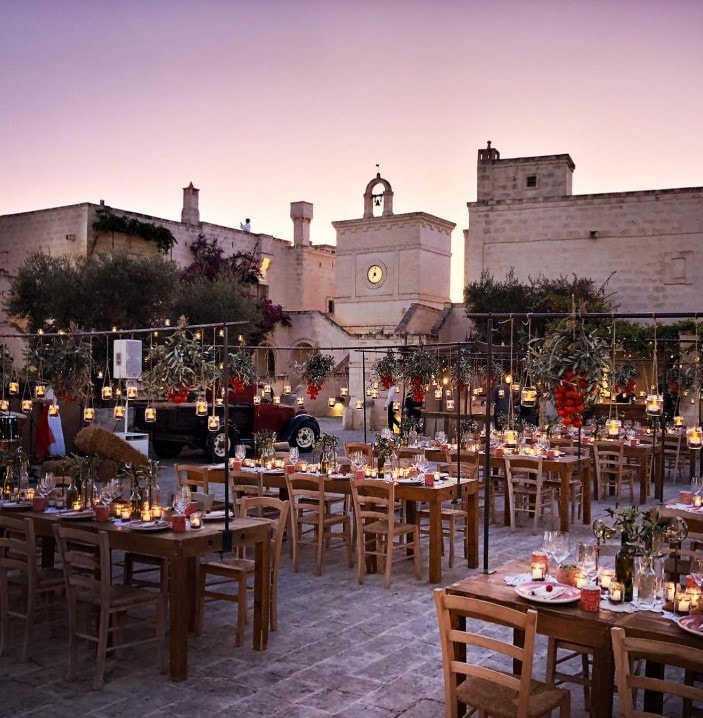
This first taste of Apulia also includes the mountains of white gold and the ferrous archaeology of the Saline Margherita surrounded by ponds inhabited by flamingos; the grotto of the Archangel St Michael in Monte Sant'Angelo, where you can buy round bread from its ovens and then enjoy it right on the beach at Vieste; artist Edoardo Tresoldi's (successful) attempt to reconstruct the basilica of Siponto, and with it time, with tons of wire mesh. To stay, try the 17th-century Masseria Celentano in San Severo, where you can enjoy gargantuan peasant dinners under star-filled skies that look like exclusively lit candelabra.
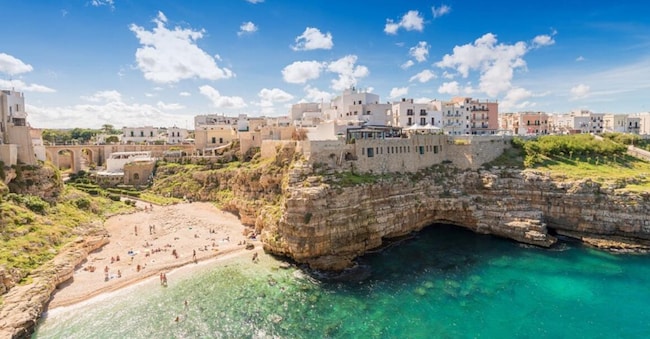
Heading south, one is drawn to Turi, especially now that it is the season of its Ferrovia cherries, big, juicy and beloved by Antonio Gramsci and Sandro Pertini who were locked up in its small prison. For the harvest of Toritto almonds, however, we will have to wait until the end of August. In the meantime, it is worth making a detour to Trani, to bow before its pale stone cathedral, and then to the lighthouse inside the small port of Molfetta where you can bite into a tomato focaccia. Perhaps one can wedge oneself inside that world of stalactites that are the Castellana caves, and then penetrate the ancestral planet enclosed in the heart of Gravina in Puglia. Just as a canyon of the American West appears Castellana, the town from which Rodolfo Valentino set out to conquer early Hollywood.