Between heaven and earth: two legends of aeronautics and motorcycling
Vintage jewellery coming back thanks to the intrepid work of artisan restorers. From Germany to Lisbon, two stories of visionaries who have brought true masterpieces back to life for collectors and connoisseurs.

It all starts with a child, a father and a plane stored in a museum. The child is Dieter Morszeck. His father Richard, owner of a luggage factory, often took him with him to the Deutsches Museum, the science and technology museum in Munich.
There they stood spellbound in front of a Junkers, to be precise a 1932 Junkers Ju 52, the super-light aircraft made of corrugated aluminium. For the father, it was an intuition: to build suitcases out of that corrugated foil. He worked in the family factory, which had been producing hat boxes and luggage since 1898, but in cardboard and leather. So he created the aluminium trolleys that became a worldwide success under the name Rimowa, an acronym for Richard Morszeck Warenzeichen. And that child? Dieter didn't think about suitcases. He had a dream: to get on that plane, to become a pilot.
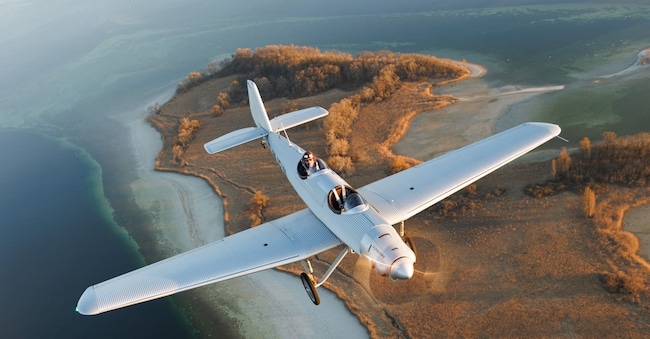
A dream now finally realised, because after selling Rimowa to the giant Lvmh, he decided to try building them himself, those vintage planes, in a small Swabian town. And since last year they can also be tried out in Italia, in a small airport that has almost stood still in time, the Nicelli, built at the Venice Lido in the 1930s. Flying over the Lagoon, seeing the bell tower of St Mark's Square as if you could touch it, is an incredible thrill. It is there, in a restored old Esso station, that Junkers has its Italia headquarters.
As in all legendary stories, success is (also) made up of dates and numbers: 1859, the year Hugo Junkers was born; 1895, when he founded Junkers & Co. in Dessau, a heating and thermal technology company. 1915: with the First World War, instead of stoves, he built the world's first all-metal aircraft, the Junkers J1. Then the war, the Second.
Jumping back a century, here we are in 2015, the year that Dieter Morszeck opened the Junkers factory in Dübendorf, Switzerland; 2016, the maiden flight of the first replica of the Junkers F13 begins. The aircraft are rebuilt to modern safety standards: a limited series of high-quality aircraft, the fascination of yesterday's aviation with modern flight technology. On average, each super-light aircraft requires 2,500 hours of manual labour and a thousand individual components designed and manufactured in-house: an almost clockwork perfection, and in fact Junkers have also become luxury watches. This is what a child's dream can do.