
Between Rome and Tokyo axis on launchers to overcome space bottlenecks
Bilateral consultations closed. The Rising Sun's defence budget will rise to 60 billion in 2027. Working towards cooperation in lunar exploration with Artemis and joint activities between Vega and H3, produced by Jaxa and Mitsubishi

Key points
An initiative that marked a further step forward in strengthening strategic cooperation between Italia and Japan has ended in Tokyo. The first round of bilateral consultations between the two countries dedicated to the space sector came about with the aim of creating the conditions for strengthening ties between Rome and Tokyo in a sphere that, beyond research and exploration, has growing industrial, foreign and security policy implications.
During the two-day meeting - promoted by the Embassy of Italia in Tokyo in collaboration with the Prime Minister's Office, the Italian Space Agency (Asi), ICE, and the Ministries of Foreign Affairs, Defence, and University and Research - there was a discussion on the respective governance systems of space activities and trade policies. A number of potential lines of development emerged from the meetings, among which the exploration sector stands out. Rome and Tokyo are involved in Artemis, NASA's programme to return man to the Moon (which recently suffered a setback with the explosion on the launch pad of a Jeff Bezos' Blue Origin launcher). The Japanese will produce a rover, while their Italian colleagues will build a habitable module for the lunar surface.
Cooperazione
On the business cooperation front, the meetings revealed Italia's interest in the Japanese Strategic Space Fund (Ssf), a one trillion yen (just under 6.3 billion dollars) government development fund that has three ambitious goals: to double the size - from 4 thousand to 8 thousand billion yen - of Japan's space economy by 2030; to increase knowledge of space and the technologies for its exploration; and to make it a lever for solving social problems on a global scale. 'The Japanese,' explains one of the figures who took part in the round tables, 'are open to collaborating with Italian companies and this is a tool we want to explore.
Satelliti
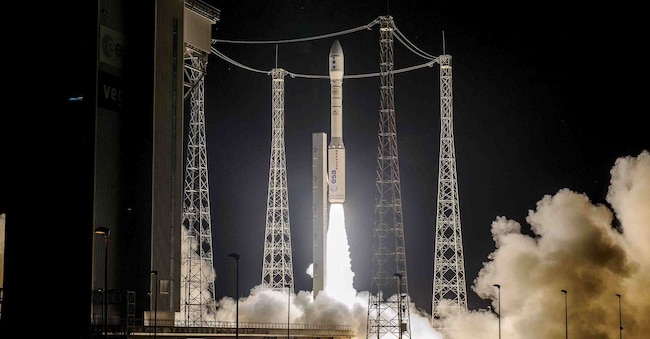
Another potential area of cooperation is the launching of satellites. Japan has a launcher - the H3 developed by the Jaxa space agency and Mitsubishi Heavy Industries - and a launch base that could prove to be a viable alternative in the event of bottlenecks in Europe. Reciprocally, the Japanese could rely on Vega.
In the diplomatic sphere, the two countries expressed interest in collaborating at the regulatory level in the UN with the aim of increasing the sustainability of space activities, and in coordinating collaborations with third countries. "Italia and Japan," explained one of the participants in the Tokyo meeting, "are medium-sized space powers and are seen as possible models by developing countries. The risks of conflict between the two countries' priorities are minimal, given Italia's interest in Africa and South America and Japan's interest in Asia.


