
Between sequins and geopolitics, Europe according to Eurovision
The 69th Eurovision Song Contest kicks off in Basel, a spectacular workshop of compromises, identities and oddities

3' min read
3' min read
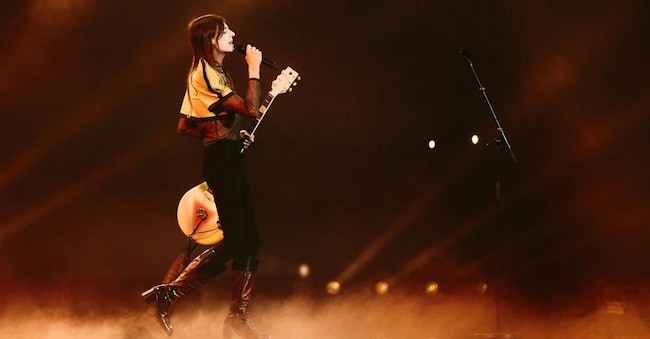
The sequins over the hurdle. Like every year, the Eurovision Song Contest has begun - the first semi-final of the 69th edition was aired last night on Rai 2, live from Basel - in a tourbillon of flames, synchronised ballets, transparencies, apocalyptic sets, pounding speakers and vocal drama. And like every year, we find ourselves anaesthetised in front of a show that, at first glance, seems improbable, exaggerated, bordering on parody.
But Eurovision was not born to be sophisticated: it was born to unite. And right in its roots lies the meaning, and even the poetry, of an event that many dismiss as kitsch, but which is in fact a deeply European pop ritual, a show that for almost seventy years has been offering a symbolic and surreal version of the continent. So before judging lyrics and stage sets; before turning up your nose at Estonian Tommy Cash's Italian-speaking rhymes (Ciao bella, I'm Tommaso / Addicted to tobacco / Me like mi coffee very important - from that pearl of pop wisdom that is the song Espresso macchiato); before jumping back in your seat at the high notes of Azerbaijani Mamagama; before raising our eyebrows at the sight of the mock-medieval armour of 19-year-old Norwegian Kyle Alessandro; before criticising the out-of-time techno of Belgium's Red Sebastian; before taking pride in the calmness of our own Lucio Corsi and humming Tutta l'Italia with Gabry Ponte (in the running for San Marino), let's try to get to the roots.
It all began in Switzerland, in 1956
.This year we return to the country where it all began. It was 1956, Europe had come out of the war, and the first edition of the Eurovision Song Contest was staged in Lugano. The idea had been born a year earlier, on the initiative of the European Broadcasting Company (Ebu): a project to unite Europe through music and test, with pioneering ambition, simultaneous television broadcasting in several countries.
The inspiration? Declaredly Italian: the Sanremo Festival, which had just begun to make the whole boot sing in front of a television set. Since then, the wigs, choreography, voting methods and even the geography of Europe have changed, but that initial imprint has remained unchanged, like a trademark (and like the Eurovision fanfare, Marc-Antoine Charpentier's Te Deum): the Eurovision Song Contest had to be simple, recognisable, spectacular, pop. And if today its exaggerated and somewhat tamarish aesthetics make us smile, let us smile too: but let us remember that this whole big show - the 'most watched music show in the world', as the two presenters, Hazel Brugger and Sandra Studer, repeatedly reminded us last night - was born as a strategy of inclusion, a way of trying to build a common language to the tune of sequins and refrains to be sung even without understanding the words.
This is well told by Dean Vuletic, historian of contemporary Europe at the University of Vienna's Centre for Research on Social Transformations, and above all author of Eurovision Song Contest. Una storia europea (Minimum Fax, 2022), an essay analysing the evolution of the event from the post-war period to the present day. More than just a music festival, the Eurovision Song Contest - Vuletic argues - has been a symbolic laboratory of Europe: 'The word Eurovision was the first example of the post-war use of prefixes such as Eur- or Euro- to name international projects and organisations: shortly afterwards, for example, EURATOM was born, established in 1957 by the member states of the ECSC'. And so the ESC became one of the first acronyms that punctuated the long road to the European Union: a light show in which national identities mingled, confronted, sometimes camouflaged, within a spectacular machine of compromises, cultural diplomacy, Cold War rivalry (before) and queer liberation (after).

